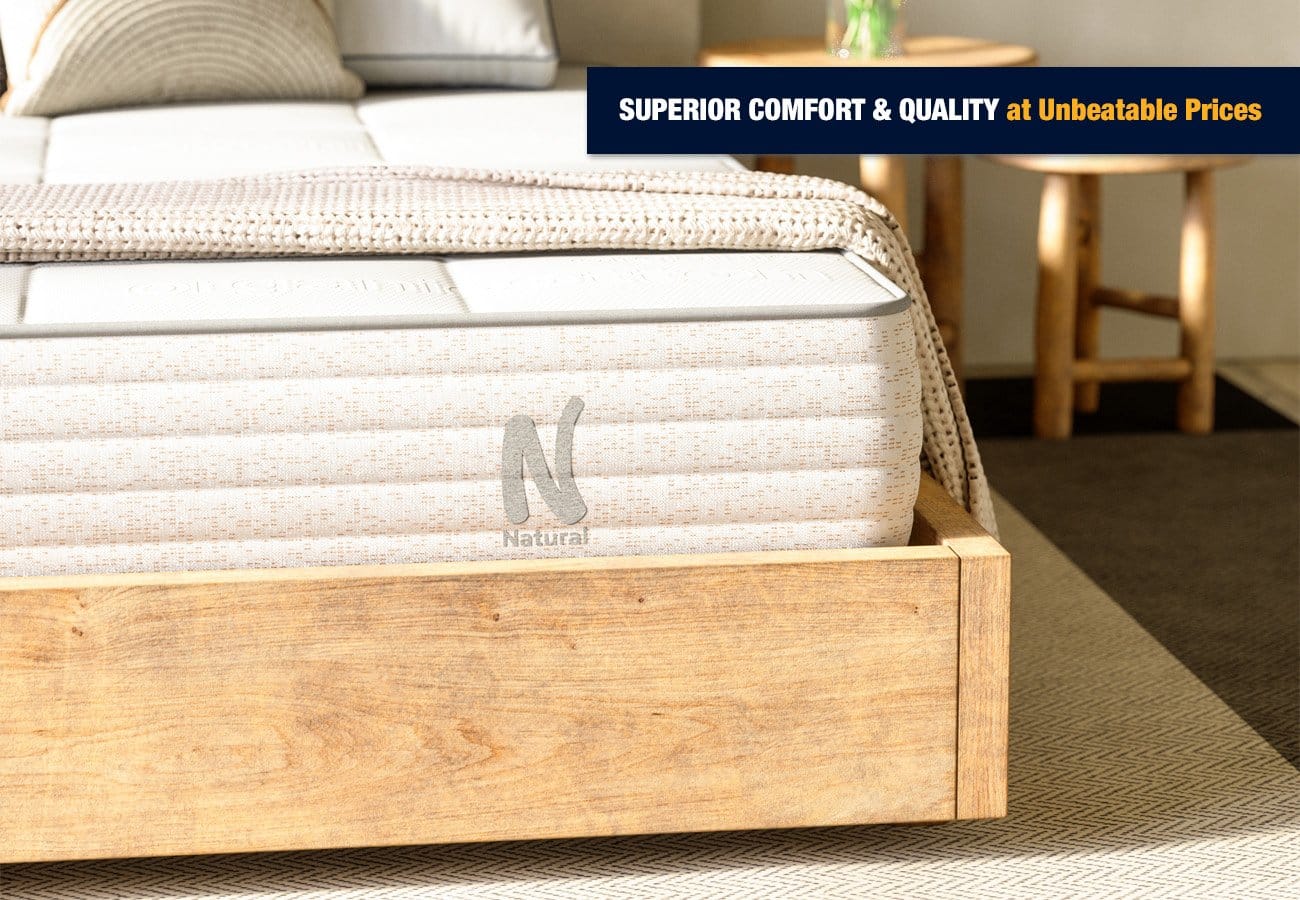
 The Best Organic Hybrid Mattress for Non-Toxic, Healthy Sleep
After years of sleeping on synthetic foam mattresses filled with questionable chemicals, I switched to the Nolah Natural 11″ Hybrid Mattress. Three years later, it’s still as comfortable as day one, and I sleep better knowing I’m not breathing in VOCs and toxins every night. Here’s everything you need to know about this game-changing organic mattress.
VERDICT: Best organic hybrid mattress for couples, side sleepers, and anyone wanting non-toxic sleep | GOTS & Oeko-Tex certified | 120-night trial | Lifetime warranty | Made in USA
If it’s getting harder to find a comfortable position in bed at night and you’re waking up stiff and achy, it may be time for a new mattress. And if your mattress has dips and lumps that don’t even out with flips or rotations, speaking from experience, I can tell you it’s not going to get better.
Finding the right new mattress can be game-changing when it comes to getting a restful night’s sleep. It needs to be comfortable and supportive for your unique needs, with the right feel and firmness for your sleeping style (side, back, or stomach).
But here’s the question most people don’t ask when mattress shopping: What is your mattress actually made of?
The Hidden Danger in Your Bedroom
Mattresses are one of those things we just assume are safe when we buy them. But if you’ve ever slept on a brand new mattress and noticed an odd smell, it’s most likely chemicals off-gassing into your bedroom air.
For the most part, the mattress industry has been unregulated, which means it can be anyone’s guess what many of us are actually sleeping on for 8 hours every night.
If you’re trying to live a healthy and green lifestyle by removing as many toxins from your life as possible, your mattress is one of the most important pieces to the puzzle. The mattress materials you sleep on are just as important as how comfortable it is while you’re sleeping.
Why Your Mattress Matters More Than You Think
Not only are most conventional mattresses made with non-biodegradable materials that fill up landfills, but many contain chemicals that can affect your health.
Toxic Chemicals Found in Conventional Mattresses:
PBDEs (Polybrominated diphenyl ethers): Fire retardants banned in 2004, but still detected in home dust, air, and food. Known neurotoxins and hormone disrupters. [Source]
VOCs (Volatile Organic Compounds): That “new mattress smell” is actually chemicals off-gassing. Can cause headaches, dizziness, respiratory irritation, and over time, liver and kidney damage. [Source]
Formaldehyde: Common in adhesives and foam treatments
CFCs (Chlorofluorocarbons): Blowing agents that deplete the ozone layer
Petrochemicals and pesticides: Used in conventional cotton and synthetic materials
Fiberglass: Some companies have been sued after customers experienced severe eye, respiratory, and skin irritations from fiberglass in their mattresses
Studies