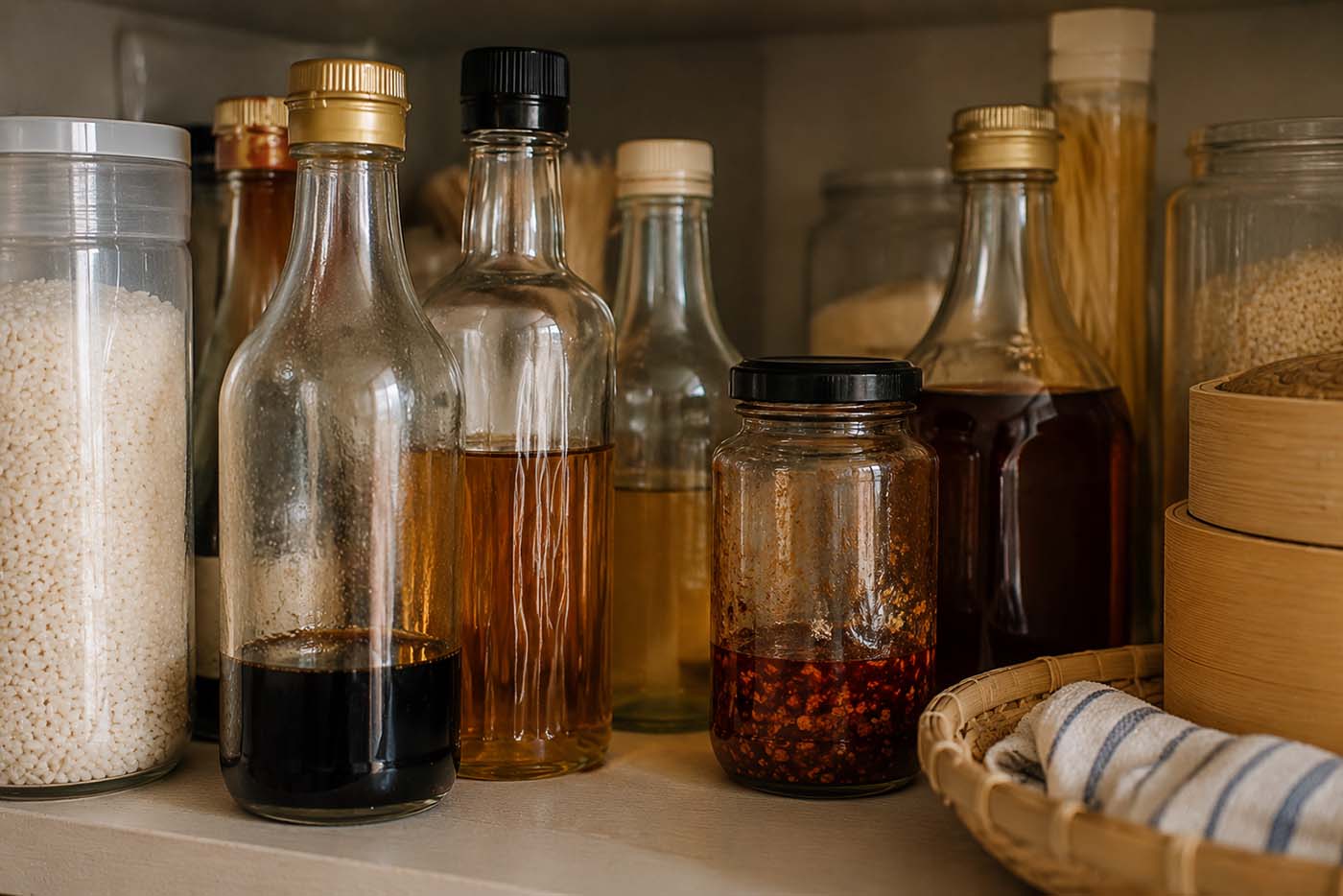
 That bottle of rice vinegar pushed to the back of the pantry, the one you bought for one stir-fry recipe two years ago, is almost certainly fine. Vinegar is one of the few condiments that’s genuinely hard to ruin. But “hard to ruin” isn’t the same as “identical to plain vinegar,” and if your bottle is the seasoned kind, the rules shift a little.
Does rice vinegar go bad?
The short answer: Plain rice vinegar is acidic enough to be self-preserving and, according to the Vinegar Institute, has an almost indefinite shelf life whether opened or not. Manufacturers still print a best-by date, typically around 2 years, and recommend refrigerating after opening for the best flavor. Seasoned rice vinegar is different: because it has added sugar and salt, Nakano lists a shorter shelf life for it, around 1 year, and recommends refrigeration after opening. Neither type needs the fridge for safety, but both benefit from it for quality.
For general pantry rules, check the food storage guide. If you’re comparing rice vinegar to a similar pantry staple, the apple cider vinegar and soy sauce guides cover related ground.
Does Rice Vinegar Go Bad: At a Glance
Plain rice vinegar, unopened
About 2 years on the label, safe well beyond it
Plain rice vinegar, opened
Best quality for 1 to 2+ years, safe indefinitely
Seasoned rice vinegar, unopened
About 1 year on the label
Seasoned rice vinegar, opened
Best quality for several months to a year, refrigerated
Refrigeration required for safety?
No, but brands recommend it after opening for freshness
Biggest real risk
Mold in seasoned bottles left uncapped or cross-contaminated
Cosmetic, not spoiled
Cloudiness, sediment, darker color, “mother” forming
Key Takeaways
Rice vinegar is acidic enough to be self-preserving, so it’s one of the least likely condiments in the pantry to actually spoil.
Plain (unseasoned) rice vinegar and seasoned rice vinegar are not the same product for storage purposes. Seasoned versions have added sugar and salt and a shorter printed shelf life.
Cloudiness, sediment, a darker color, or a stringy “mother” forming are cosmetic changes, not spoilage.
Refrigeration isn’t required for safety on either type, but the major brands recommend it after opening to preserve flavor, and it’s worth following for seasoned bottles especially.
Real spoilage signs (visible mold, a rancid or otherwise wrong smell) are rare but do happen, mostly in seasoned vinegar that’s been contaminated by a dirty spoon or left uncapped.
An expired best-by date doesn’t mean the bottle is unsafe. It’s a quality marker, not a safety cutoff.
Why Rice Vinegar Almost Never Spoils
The science: acidity does the preserving
Rice vinegar is made through a two-step fermentation: sugars from rice become alcohol, then that alcohol becomes acetic acid. All vinegar sold at retail in the US must be at least 4% acidity under FDA rules, according to the Vinegar Institute. Rice vinegar tends to