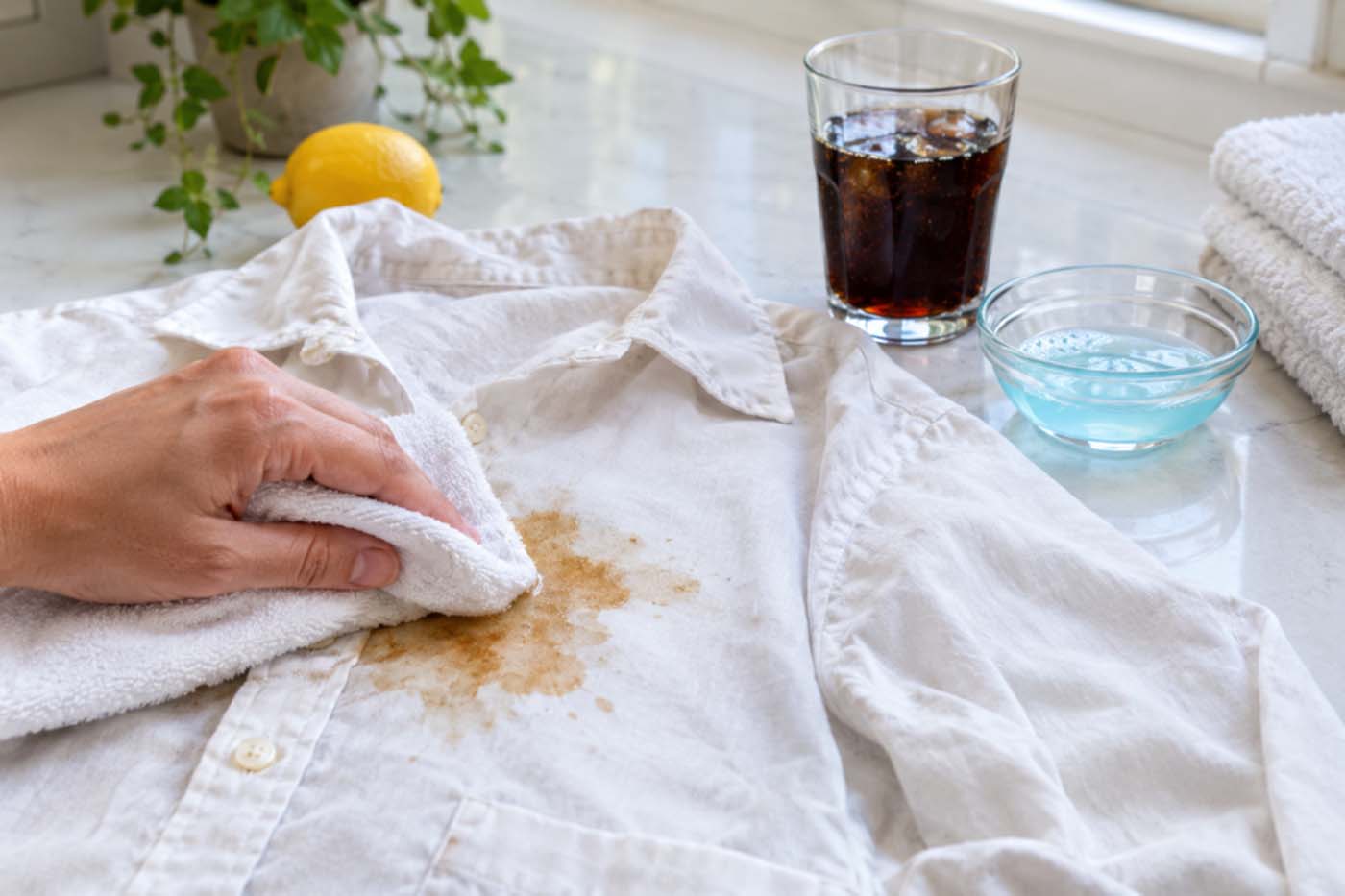
 Someone bumped my arm at a backyard barbecue and half a rum and coke ended up down the front of my light khakis. I did what most people would do: blotted it with a napkin, rinsed it with cold water from the hose later that night, and figured the faint brown shadow left behind would come out in the next wash. It mostly did, color-wise. What I didn’t expect was that the same spot kept looking slightly dingy for weeks afterward, like it was attracting more dirt than the rest of the pants. It turns out I’d solved the wrong half of the problem.
The Short Answer: Blot up as much liquid as you can, then flush the stain from the back with cold water to clear out the sugar, not just the color, and to avoid setting the caramel pigment the way heat would. Work in dish soap to finish breaking down the sticky residue, then use vinegar or lemon juice on any remaining discoloration, especially from dark colas. For dried or set stains, soak in oxygen bleach rather than repeating the earlier steps. Skip the dryer until you’re sure both the color and the sugar are gone, since dryer heat can cook any leftover sugar residue directly into the fabric.
Why a Soda Stain Is Actually Two Stains at Once
Most guides treat a soda stain as a color problem: get the brown or the red or the orange out, and you’re done. That misses half of what soda actually leaves behind. Every soda is mostly sugar and water, plus whatever gives it its color. The pigment is the part you can see, but the sugar is the part that keeps causing trouble after the color is gone. Sugar residue left in the fibers acts like a magnet for new dirt and grime, which is why a soda stain that looked fully treated can start looking dingy again weeks later, even though no new spill happened.
That’s exactly what happened with my khakis. The visible pigment came out in the wash. The sugar didn’t fully rinse away first, so that spot kept attracting more soil than the surrounding fabric.
The Golden Rule: Chase the Sugar, Not Just the Color
Here’s what separates a soda stain from a lot of other spills on this site. Clearing the visible color is only half the job. If you rinse and treat for color but don’t flush out the sugar underneath it, the stain can look completely gone the day you treat it and still cause problems down the road, since that residual sugar keeps drawing in dirt long after the pigment has faded. A thorough cold water flush before you do anything else is what actually addresses both halves of the problem at once.
Stain Variants: Clear, Colored, and Caramel
Clear sodas (club soda, tonic, lemon-lime, ginger ale): Minimal visible pigment, but the sugar residue is exactly the same problem as any other soda. Don’t skip the flush just because you can’t see a stain.
Bright, dye-based sodas (orange, grape, fruit punch, red cream soda): These get their color from synthetic dyes rather than caramel color. They aren’t necessarily easier to treat just because there’s no caramel color invo
How to Get Soda Stains Out of Clothes (And Why the Sugar Matters More Than the Color)