 You grab the biggest, roundest pumpkin at the patch, and a week later it’s soft on the bottom. Or you carve one for the porch and roast the leftovers, only to end up with a stringy, watery mess. Knowing how to pick a pumpkin comes down to a few quick checks, and to remembering that the pumpkin you carve usually isn’t the best one to cook.
The short answer: choose a pumpkin that feels heavy for its size, has a firm stem, has a rind your fingernail can’t easily dent, and has no soft spots or cracks. Buy a large field pumpkin to carve and a small pie pumpkin to cook.
Five quick checks before you buy
1Check the stem
Pick one that still has an inch or two of stem, per Illinois Extension, and make sure it feels firm. A shriveled stem suggests the pumpkin has been sitting a while, and a rubbery one can signal disease. Don’t lift a pumpkin by its stem. If it snaps, rot has an easy way in, so support it from underneath instead.
2Feel the weight
Pick it up. A good pumpkin feels heavier than it looks, which points to dense, solid flesh. Iowa State notes that heavier pumpkins have thicker walls, which are sturdy but take more effort to carve.
3Give it a tap
Iowa State suggests knocking on a carving pumpkin and listening for a somewhat hollow sound. Treat it as a rough guide, not a guarantee, and pair it with the checks below.
4Test the rind
Push a fingernail lightly against the skin. Kansas State Extension says a mature pumpkin holds up to it, while one that dents easily was picked too early and is more likely to rot. Pass on any pumpkin with soft spots, cuts or cracks, since damage lets decay in.
5Check the shape and the bottom
Turn it over. Kansas State says to check the bottom for soft or sunken areas, where decay often starts. If you plan to carve, look for a flat base so it sits level and won’t tip with a light inside. The overall shape is mostly a matter of preference. Don’t worry too much about color. Illinois Extension says fading color over time doesn’t necessarily mean lower quality, and Kansas State notes that modern varieties range from bright orange to nearly white.
Carving pumpkin or cooking pumpkin?
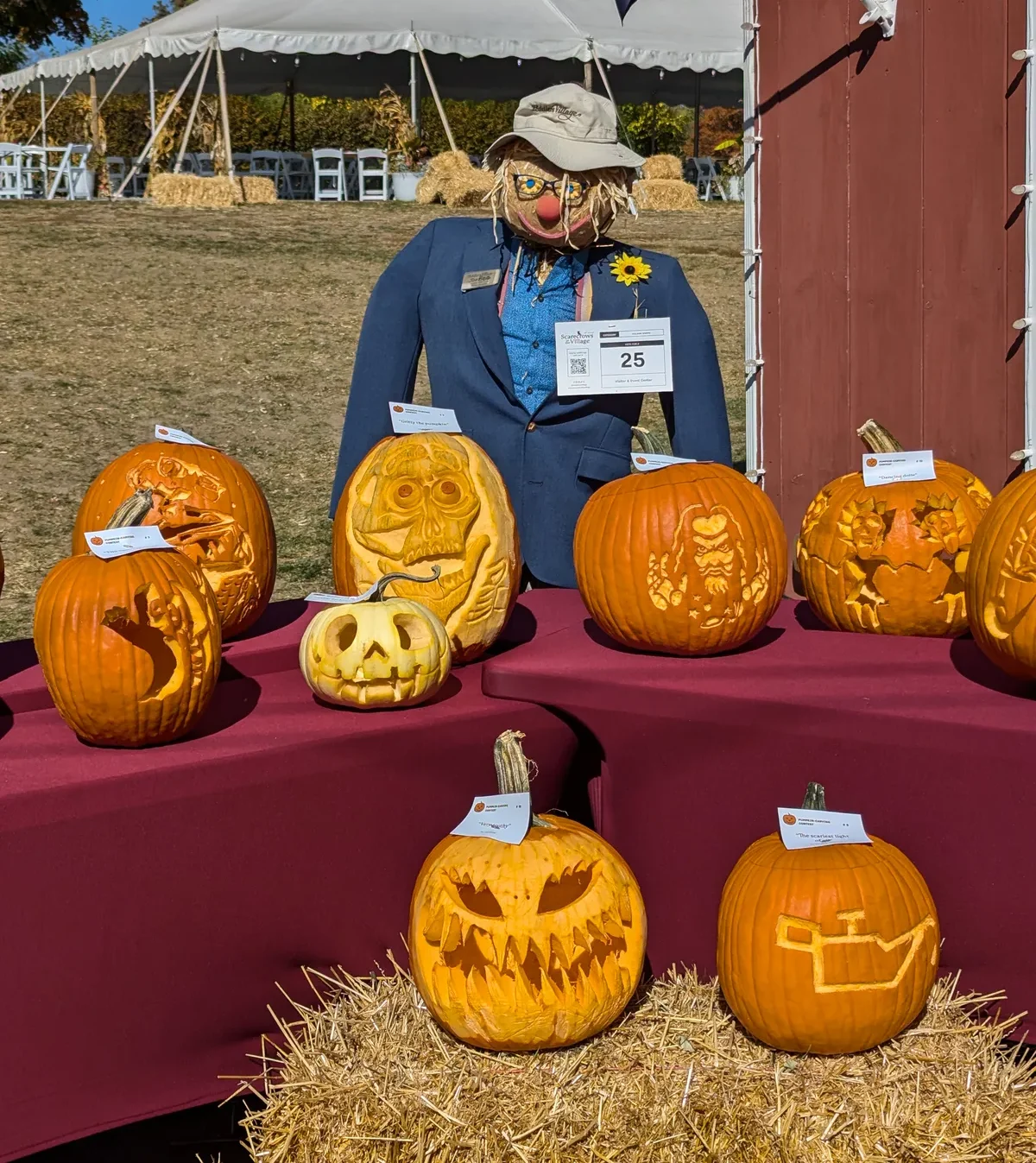
A few selections from the annual pumpkin carving contest at Peddler’s Village in PA
This is where most people go wrong. The two jobs need different pumpkins.
For carving
For cooking
Type
Field or jack-o’-lantern pumpkins
Pie or sugar pumpkins, plus butternut squash
Size
Medium to large
About 4 to 8 pounds
Flesh
Watery and stringy
Smoother, denser and sweeter
Best for
Jack-o’-lanterns and display
Roasting, baking and puree
Other good cooking choices on Iowa State’s list include Long Island Cheese pumpkins and white Lumina pumpkins. Illinois Extension recommends pie pumpkins for baking because they run smaller and have a finer texture than carving types.
Rule of thumb: if you’ll roast it, buy a small pie pumpkin. If you’ll carve it, buy the big one. If you want both, buy two.
How to make a pumpkin l