

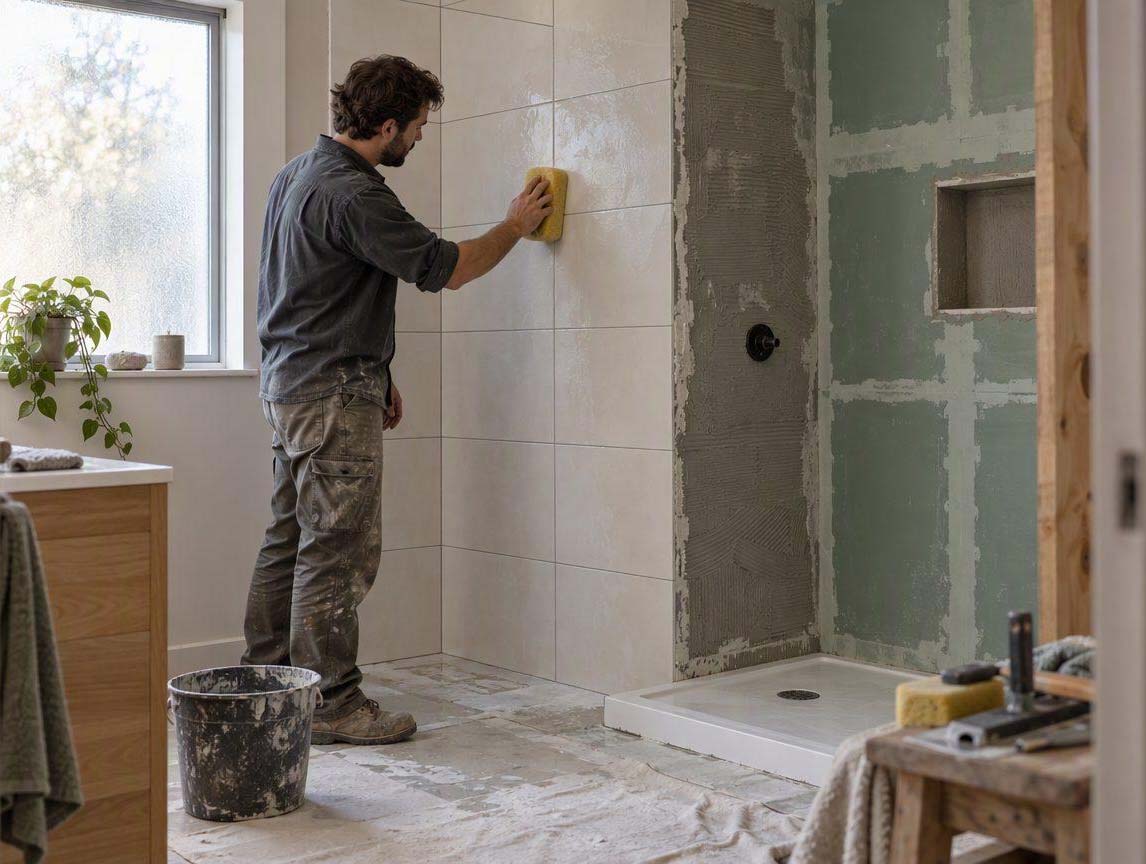
 Before you fall for those showroom samples, check the wall you’re tiling. Even after you’ve finished tiling, shower splashes and steam will keep hitting that bathroom wall. Your favorite finish may also demand more scrubbing than you’d like, especially where residue collects along grout joints. In Houzz’s 2025 renovation survey, the share of homeowners buying wall tile or backsplashes fell four percentage points from the prior year to 29% in 2024.
Choose for the room before choosing a pattern
Use conditions as the first filter
What will get on the wall you’re tiling? Before choosing sizes or colors, note how often water hits the wall and what you’ll have to wipe off. A shower needs a wet-area assembly; a kitchen backsplash needs manageable cleanup. A living-room accent wall usually raises different questions about weight and visible cuts.
The same tile won’t work in every room. Separate direct water contact from occasional splashes: a wall behind a vanity isn’t exposed like the inside of a shower. Include the mess you’ll be cleaning on your list. You’ll wipe off toothpaste around the sink and cooking grease behind the range. A textured living-room wall adds dust to the mess you’ve got to clean.
A room-by-room comparison
Application
Moisture exposure
Cleaning priority
Visual scale
Installation focus
Bathroom wet zone
Direct and repeated
Soap residue and mineral deposits
Joint layout around fixtures
Approved substrate and waterproofing system
Kitchen backsplash
Intermittent splashes
Grease and cooking residue
Relationship to counters and cabinets
Outlets, corners, and edge details
Decorative accent wall
Usually low
Dust and occasional marks
Viewing distance and pattern repeat
Flatness, weight, and visible cuts
As you review interior wall tiles, keep your room notes nearby and reject anything that clashes with the intended location or the manufacturer’s installation instructions.
The right choice fits the room you actually use, rather than the showroom you visited.
How to choose wall tile for bathroom walls
Should every bathroom wall be tiled?
In a bathroom, some walls can stay untiled. With proper ventilation, painted drywall can cover dry areas; keep tile where water hits repeatedly. Decorative tile alone won’t do the job of the waterproofing assembly a shower or tub surround requires. Houzz’s 2025 survey found that 24% of renovating homeowners remodeled a guest bathroom in 2024, equal to the share remodeling a kitchen.
Which tile materials suit wet bathroom walls?
Ceramic and porcelain are common choices when the product is approved for the intended wall application. Porcelain tile absorbs less water. Some ceramic wall tiles are easier to cut, depending on their density. Even a tile with manageable weight and an easy-to-maintain finish still needs the manufacturer’s bathroom-wall approval before you choose it. Get the product’s wall-use instructions instead of treating a bathroom photo as proof of


