

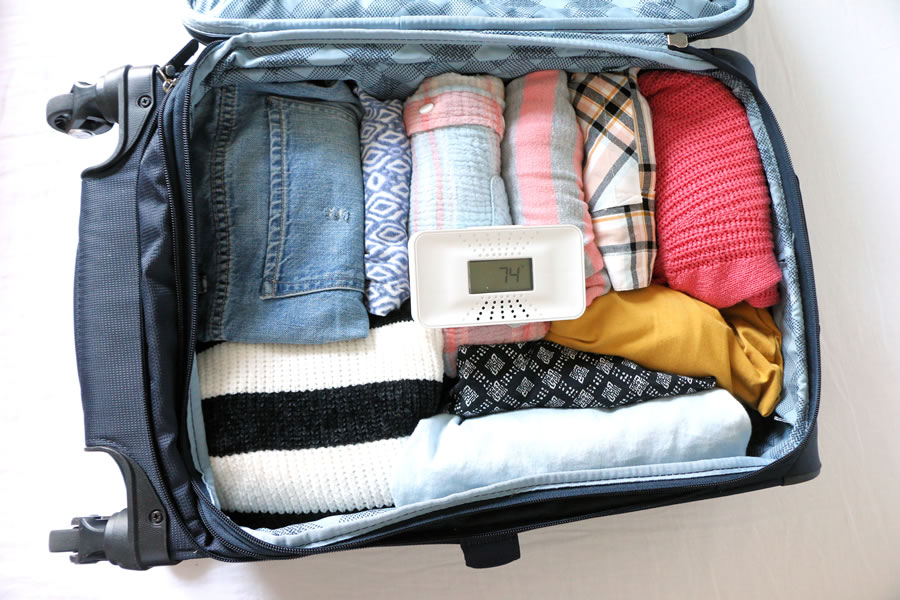
 Wondering if you need a carbon monoxide detector for travel? Hotels and vacation rentals don’t always have working CO alarms, and carbon monoxide poisoning kills travelers every year. Here’s the portable detector we never travel without and why it could save your life.
Traveling is incredible. You get to explore new places, experience different cultures, and create lasting memories. But there’s one thing most travelers overlook that could literally save their lives.
It’s not travel insurance. It’s not a first aid kit. It’s something even more fundamental to your safety.
It’s a portable carbon monoxide detector.
I know what you’re thinking. Isn’t that being a bit paranoid? Unfortunately, no. After researching the risks and hearing real stories of travelers who didn’t make it home, I never travel without one anymore. And once you read what I’ve learned, you won’t either.
In This Guide:
Why You Need a Travel CO Detector
Real Traveler Stories (Warning: Serious)
Best Portable CO Detector for Travel
How to Use It While Traveling
Additional Hotel Safety Tips
Common Questions Answered
Quick Answer: Do I Need a CO Detector for Travel?
Yes. Carbon monoxide poisoning kills travelers every year in hotels, vacation rentals, and Airbnbs worldwide. Many accommodations lack working CO detectors, and laws vary by country. A portable carbon monoxide alarm is an inexpensive, potentially life-saving device that should be in every traveler’s suitcase. We recommend the First Alert 10-Year Portable CO Alarm.
Why Carbon Monoxide is a Serious Travel Risk
Carbon monoxide (CO) is called the silent killer for good reason. It’s invisible, odorless, colorless, and tasteless. You cannot detect it with your senses.
What Makes Carbon Monoxide So Dangerous?
Carbon monoxide is produced from any fuel-burning source, including:
Furnaces and boilers
Gas stoves and ovens
Water heaters
Fireplaces and chimneys
Dryer vents
Heating and air conditioning systems
Generators (common in areas with power issues)
Cars and boats
According to the Journal of Travel Medicine, CO has 200 to 250 times greater attraction to the hemoglobin in your blood than oxygen. When carbon monoxide leaks into a room, it aggressively displaces oxygen in your bloodstream, essentially suffocating you from the inside out.
The Centers for Disease Control and Prevention (CDC) reports that approximately 400 people in the United States die from unintentional carbon monoxide poisoning every year, with thousands more requiring emergency treatment.
Critical Fact: You can be poisoned and die in your sleep without ever waking up. Early symptoms mimic common travel ailments like jet lag or food poisoning, making CO especially dangerous for travelers.
Why Hotels and Rentals Are High-Risk
The problem isn’t just that CO exists. It’s that when we travel, we enter unfamiliar spaces where:
Systems may be improperly installed
Equipment is poorly maintained
Ventilation is inadequate
CO detect


