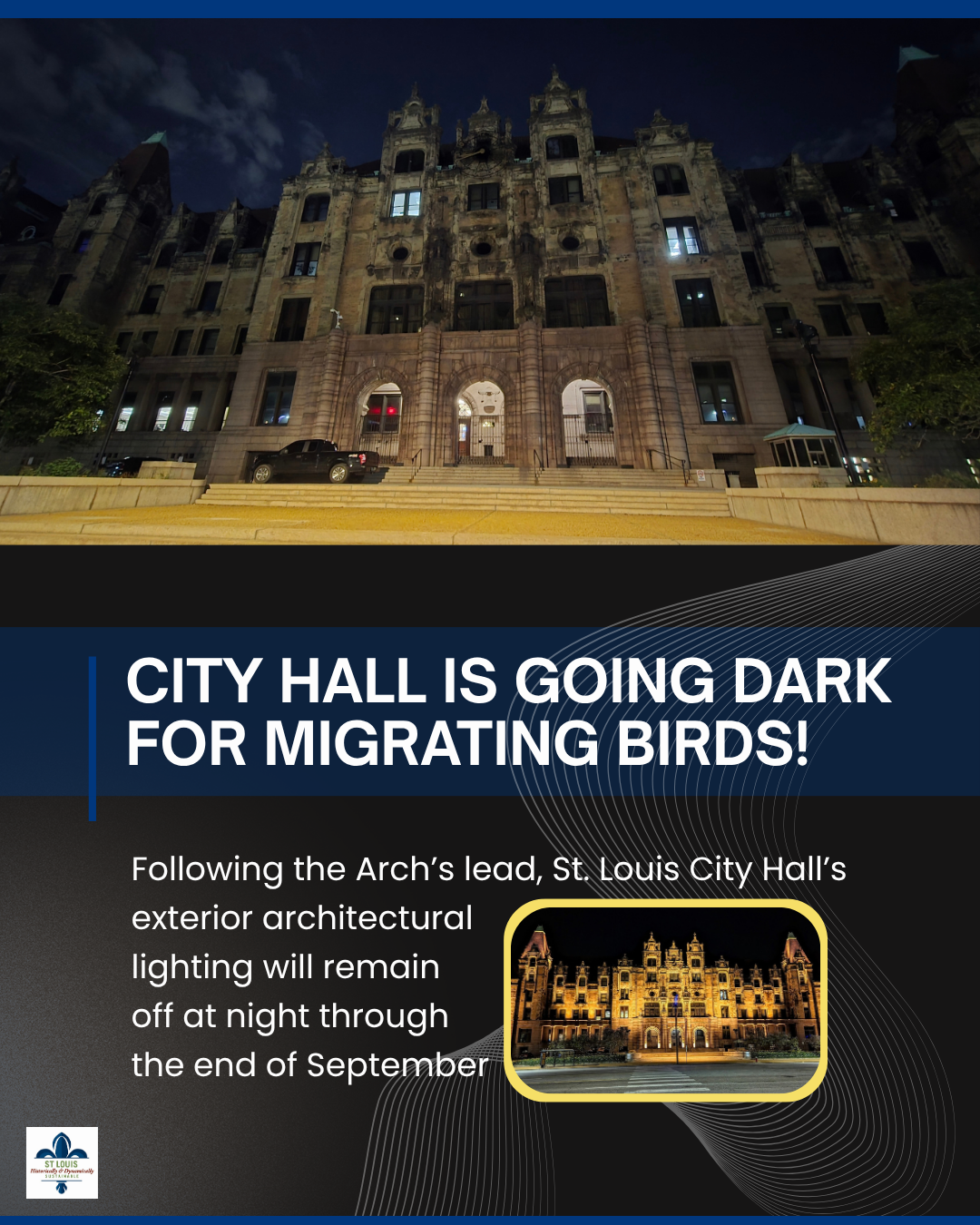
 The exterior architectural lighting of City Hall will remain off at night through September 30 to help protect the millions of birds currently migrating south for the winter. St. Louis City sits along the Mississippi Flyway, a crucial route for migratory birds. More than 350 migratory bird species utilize the Mississippi Flyway, encompassing about 60% of North American songbirds and 40% North American waterfowl. Birds fly primarily at night to avoid predators and navigate using the stars and landscape features like the Mississippi River. Hundreds of millions of birds are estimated to travel through states along the Mississippi Flyway on their journey south, stopping throughout the region to rest and feed.This amazing feat is celebrated on World Migratory Bird Day – where this year, the City of St. Louis was recognized as the first city to earn both Urban Bird Treaty City and Bird City distinctions.Nighttime lighting can disorient and distract migrating birds, drawing them off course or to collide with windows and reflective glass. Turning off unnecessary outdoor lights reduces those risks. Learn more about incorporating DarkSky-friendly lighting at your home to protect wildlife at DarkSky Missouri. City Hall’s iconic architectural uplighting, designed by Randy Burkett Lighting Design -the firm behind the Gateway Arch’s lighting design- will remain off until Oct. 1. This effort follows Resolution 240, passed by the Board of Aldermen in February, which encourages coordination among City departments to implement bird-friendly practices that protect and enhance urban biodiversity. Other City efforts to protect and enhance urban biodiversity include the Milkweeds for Monarch program, through which the City has restored and dedicated 29 acres of native prairie space along the Mississippi to support the Great Monarch Migration and to give our feathered friends more places to rest as they travel across North America. Together, these efforts reflect the City’s commitment to protecting St. Louis’ urban wildlife and supporting the birds and other species that depend on the Mississippi Flyway.
City Hall Turns Lighting Off for Migrating Birds