
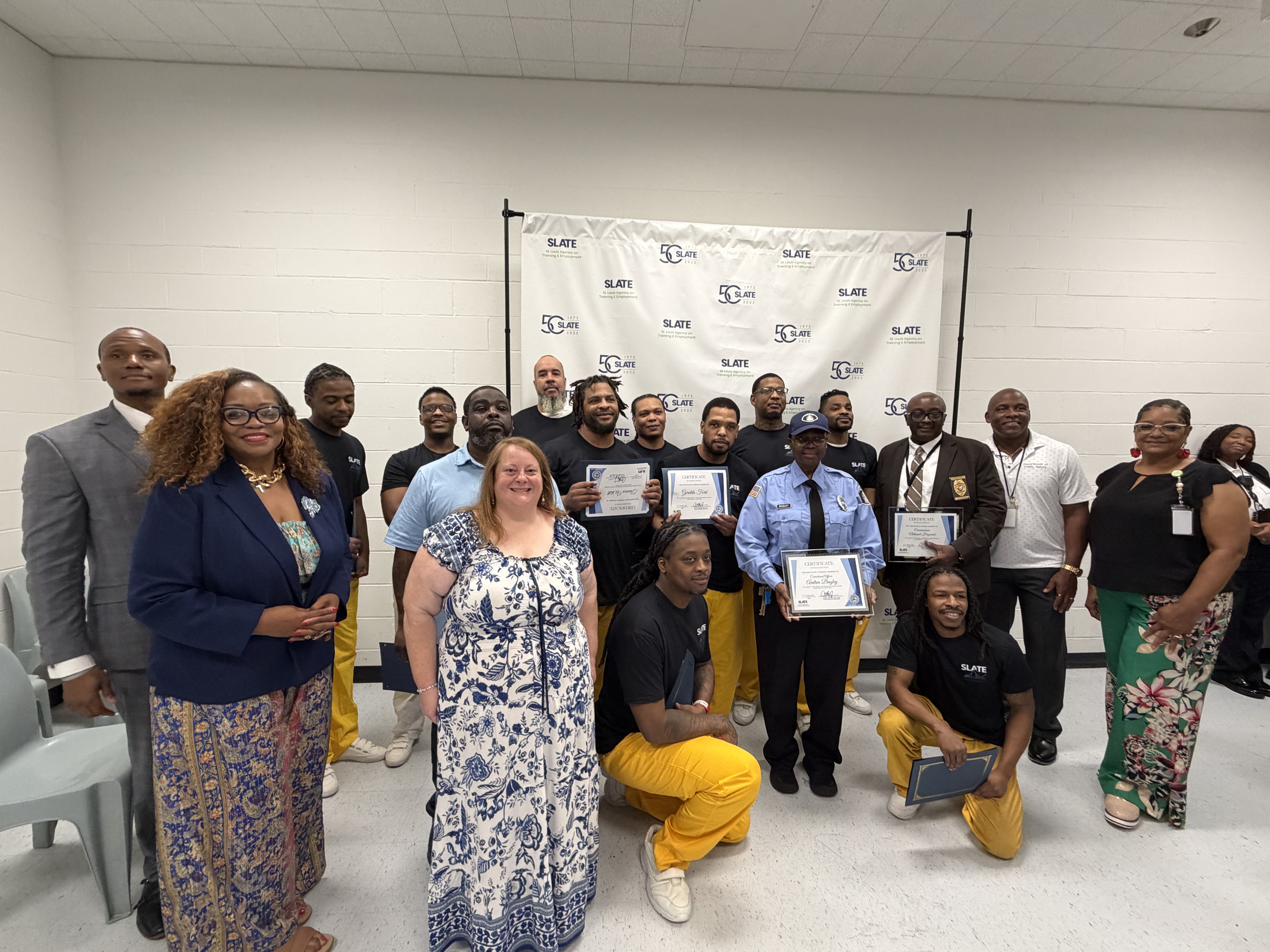
 The City of St. Louis’ Division of Corrections, a division of the Department of Public Safety, and the St. Louis Agency on Training and Employment (SLATE) celebrated the graduation of 14 residents of the St. Louis City Justice Center who successfully completed the Prison to Prosperity Program today.”This graduation ceremony shows the good that can happen when City departments collaborate,” said Mayor Cara Spencer. “The Prison to Prosperity Program is creating real opportunities that help residents build brighter futures. By investing in people while they are incarcerated, we are strengthening families, improving public safety, and creating pathways to long-term success.”The intensive 10-week program combines workforce development with personal growth. Led by professionals from SLATE, participants receive instruction in emotional regulation, goal setting, job readiness, financial literacy, communication, and other essential life skills that prepare them for employment and successful reentry. “The program is really about meeting people where they are and giving them the opportunity to reflect, grow, and build a better future,” said Connie Johnson, Executive Director of SLATE. “Our role is to connect participants with the training resources and employment opportunities they need to successfully reenter the workforce and become self-sufficient.”A hallmark of the program is the focus on the head, heart, and hands—encouraging participants to reflect on their experiences, develop healthier decision-making skills, build confidence, and gain practical workforce knowledge they can immediately apply upon returning to the community. Graduates leave with a renewed sense of purpose and the tools needed to pursue meaningful employment and long-term stability. “The program really helped me to look at things differently. It taught me how to forgive myself. I never had an experience like this program. The information we get, we share with the guys in our wing. SLATE helps us, and we share that information to help them. I really appreciate SLATE coming in and helping us out,” said program graduate Michael Hollins. Following their release, graduates will continue working with SLATE to build upon the skills developed during the program and connect with employment opportunities and other resources that support successful reintegration into the community. “We want every resident who leaves the City Justice Center to have the tools, confidence and support needed to succeed,” said Nate Hayward, Commissioner of Corrections. “The Prison to Prosperity Program equips residents with practical skills, personal growth and a roadmap for the future. Their success after release is one of the greatest measures of our success.” This graduating class marks the first cohort of the Prison to Prosperity Program. Building on its early success, the Division of Corrections and SLATE are already planning future cohorts to expand the program’s impact and provide more residents with





Latest Promotions


Our Sponsors
