

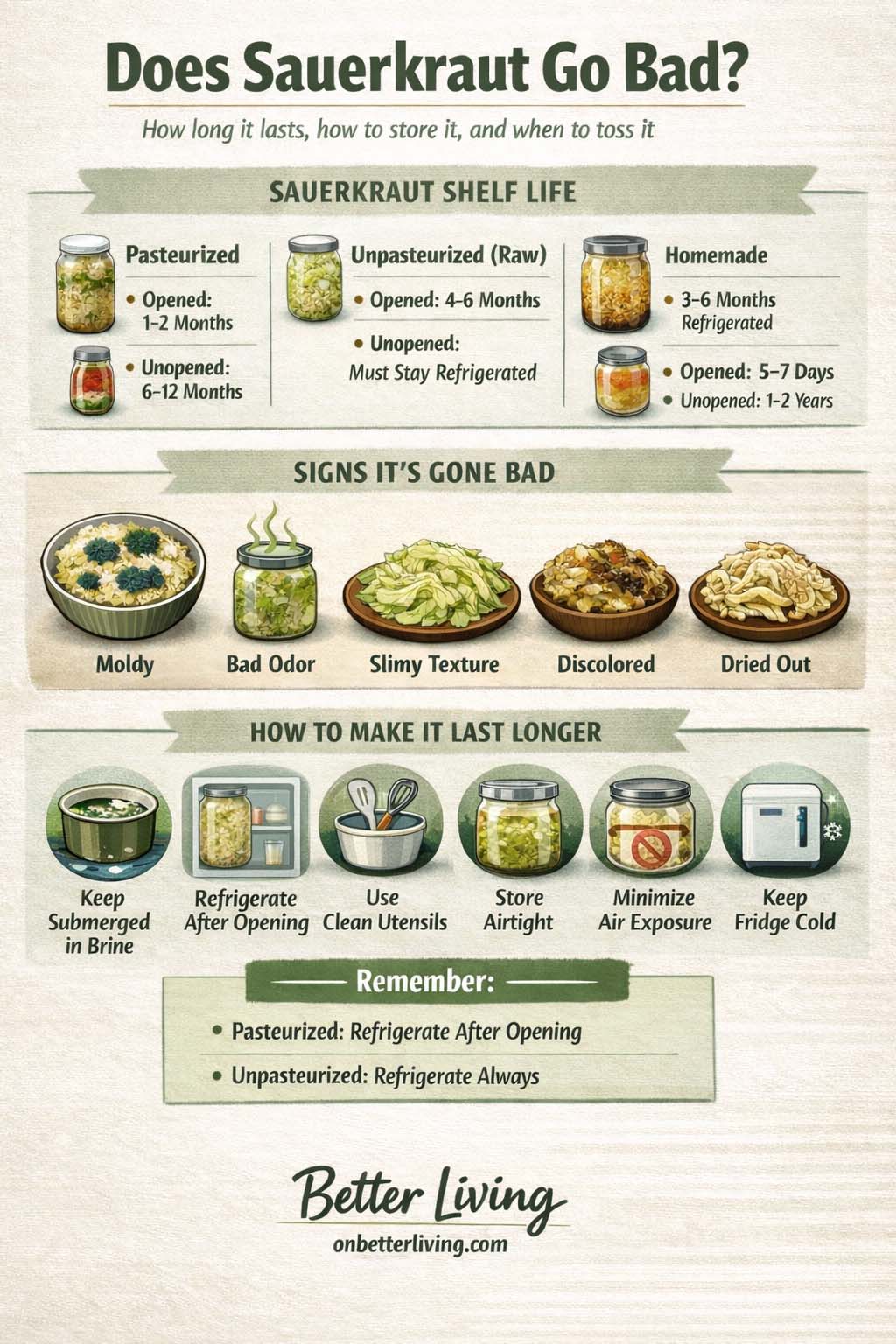
 Does sauerkraut go bad? Yes, sauerkraut can go bad, but its shelf life varies dramatically depending on the type and how you store it.
Tangy, crunchy, and packed with probiotics, sauerkraut has been a beloved condiment for centuries. This fermented cabbage dish adds a distinctive zing to everything from hot dogs and sandwiches to salads and charcuterie boards.
However, if you’ve ever stared at a jar of sauerkraut that’s been sitting in your fridge for months, you might wonder exactly when it expires and how to tell if it’s still safe to eat.
Whether you’re enjoying store-bought pasteurized kraut or homemade raw sauerkraut, understanding how to recognize spoilage is important. In this article, we’ll discuss the signs of sauerkraut spoilage, proper storage methods, and answer frequently asked questions about keeping your kraut fresh.
Key Takeaways
Proper storage significantly extends sauerkraut’s shelf life, though it can eventually go bad
When stored in the refrigerator, unpasteurized sauerkraut lasts 4-6 months, while pasteurized varieties last 1-2 months after opening
Watch for mold growth, off odors, slimy texture, and significant discoloration as signs of spoilage
Always keep sauerkraut submerged in brine and use clean utensils to prevent contamination
Does Sauerkraut Go Bad?
Yes, sauerkraut can definitely go bad. Although the fermentation process creates natural preservatives through lactic acid and low pH, sauerkraut isn’t immune to spoilage.
The fermentation that makes sauerkraut so tangy and probiotic-rich also gives it impressive longevity. Nevertheless, that doesn’t mean it lasts forever. Even the best-fermented kraut can spoil through improper storage, contamination, or simply too much time.
Several key factors determine whether your sauerkraut goes bad:
Type of sauerkraut: Pasteurized vs. unpasteurized makes a huge difference in shelf life
Storage temperature: Refrigeration dramatically extends freshness
Brine submersion: Cabbage exposed to air will spoil quickly
Contamination: Dirty utensils or double-dipping introduces harmful bacteria
Time: Even properly stored sauerkraut eventually loses quality
Understanding these factors helps you maximize your sauerkraut’s shelf life and recognize when it’s time to toss it.
How Long Does Sauerkraut Last?
Three critical factors determine sauerkraut’s shelf life: the type of sauerkraut, whether you’ve opened it, and how you store it.
Store-Bought Pasteurized Sauerkraut
Unopened, pantry storage: 6-12 months (or until the “best by” date)
Unopened, refrigerated: 3-6 months past the best-by date
Opened, refrigerated: 4-6 weeks
Heat treatment kills bacteria in pasteurized sauerkraut, extending shelf life. However, this process also eliminates most of the beneficial probiotics.
Unpasteurized (Raw) Sauerkraut
Unopened, refrigerated: Must always be kept refrigerated
Opened, refrigerated: 4-6 months when properly stored
Stores sell raw sauerkraut in the refrigerated sec


