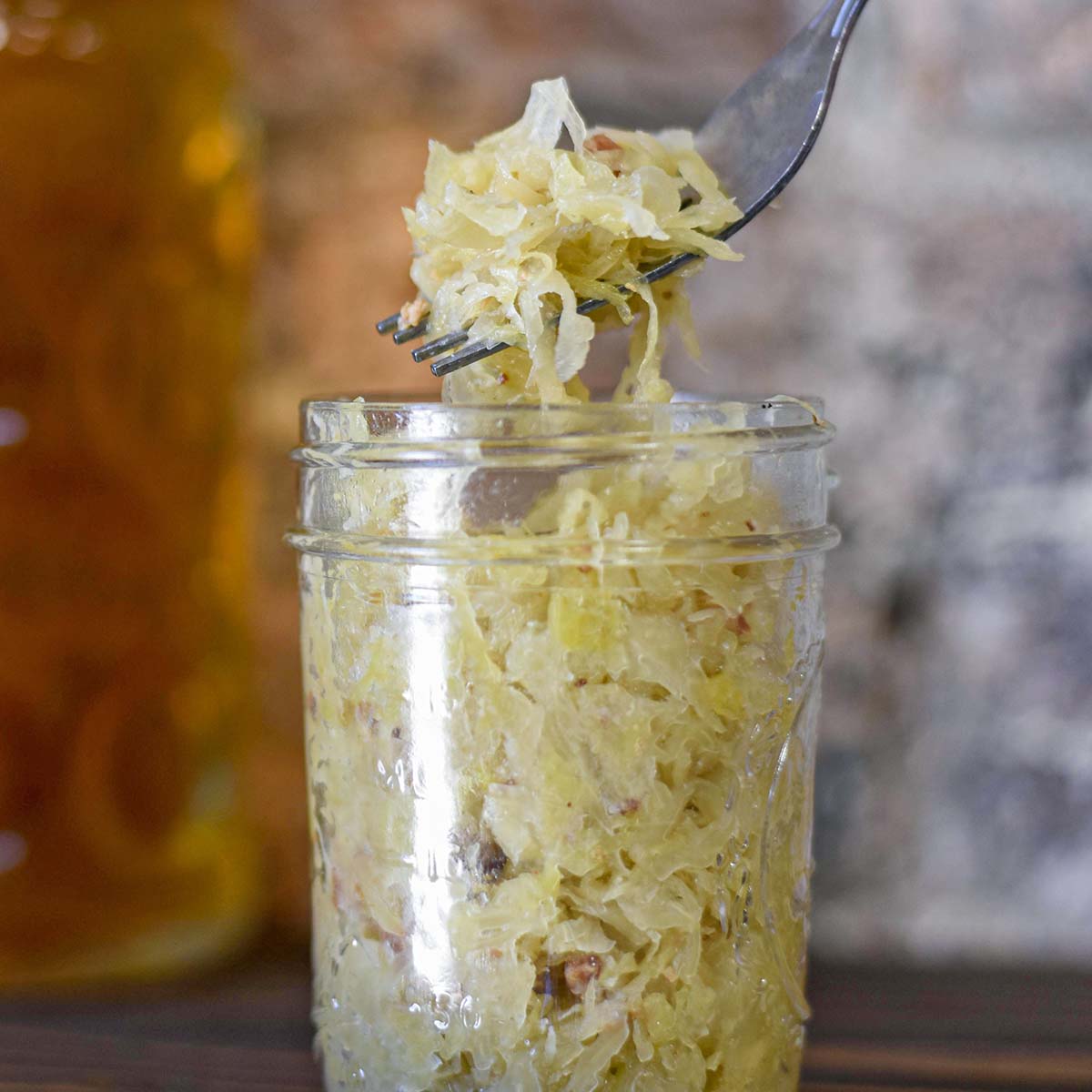
 This easy, homemade sauerkraut recipe is one of the simplest and most rewarding ferments you can make. With just cabbage, salt, and time, you can create tangy, probiotic-rich homemade sauerkraut that supports gut health and adds brightness to almost any dish. This guide walks you through the traditional fermentation method, explains the science behind it, and includes a troubleshooting section so you can confidently handle common issues like yeast, mold, and brine problems.
What Is Sauerkraut?
Sauerkraut literally means “sour cabbage” in German. It’s made by fermenting finely shredded cabbage with salt, allowing natural lactic acid bacteria to convert sugars into lactic acid. This fermentation process naturally preserves the cabbage and creates its distinctive sour flavor.
Sauerkraut is one of those rare foods that’s both incredibly simple and surprisingly powerful. At its core, it’s just cabbage and salt, but through natural fermentation, it transforms into a probiotic-rich staple that supports digestion, boosts gut health, and adds brightness to almost any meal.
Cultures around the world have relied on fermented cabbage for centuries, not just for its flavor but for its ability to preserve nutrients and keep vegetables fresh long after harvest.
Why Make Sauerkraut at Home?
Making sauerkraut at home is more than a kitchen project, it gives you complete control over quality, flavor, and nutrition.
Most store-bought versions are convenient, but many are pasteurized or preserved with vinegar, which means they lack the live probiotics that make traditional sauerkraut so beneficial. When you ferment it yourself, you get the full spectrum of living bacteria, a cleaner ingredient list, and the freedom to customize flavors by adding ingredients like garlic, jalapeños, caraway, ginger, or whatever inspires you.
It’s also incredibly cost-effective. A single head of cabbage can yield a jar of sauerkraut that lasts for months, and the process requires no special equipment. All you need is a jar, sea salt, and a bit of patience.
Homemade sauerkraut is not only fresher and more vibrant than most store-bought versions, but also deeply satisfying to create. Once you learn how easy it is to make, you’ll want to keep it as a staple in your home.
Sauerkraut Recipe: Ingredients and Equipment
You only need a few simple ingredients and basic tools to make this traditional sauerkraut recipe at home:
Ingredients
1 medium green cabbage (about 2–3 lbs)
1.5–2 tablespoons fine sea salt (2–3% of cabbage weight)
Optional: caraway seeds, garlic, juniper berries, or other flavorings
Equipment
Large mixing bowl
Cutting board and sharp knife
1 quart-size mason jar or fermentation crock
Fermentation weight (a smaller jar, glass weight, or water-filled bag)
Clean cloth or airlock lid
How to Make Sauerkraut: Step-by-Step Instructions
Step 1: Prep the Cabbage
Remove any damaged outer leaves. Quarter the cabbage, remove the core, and slice it into thin shred