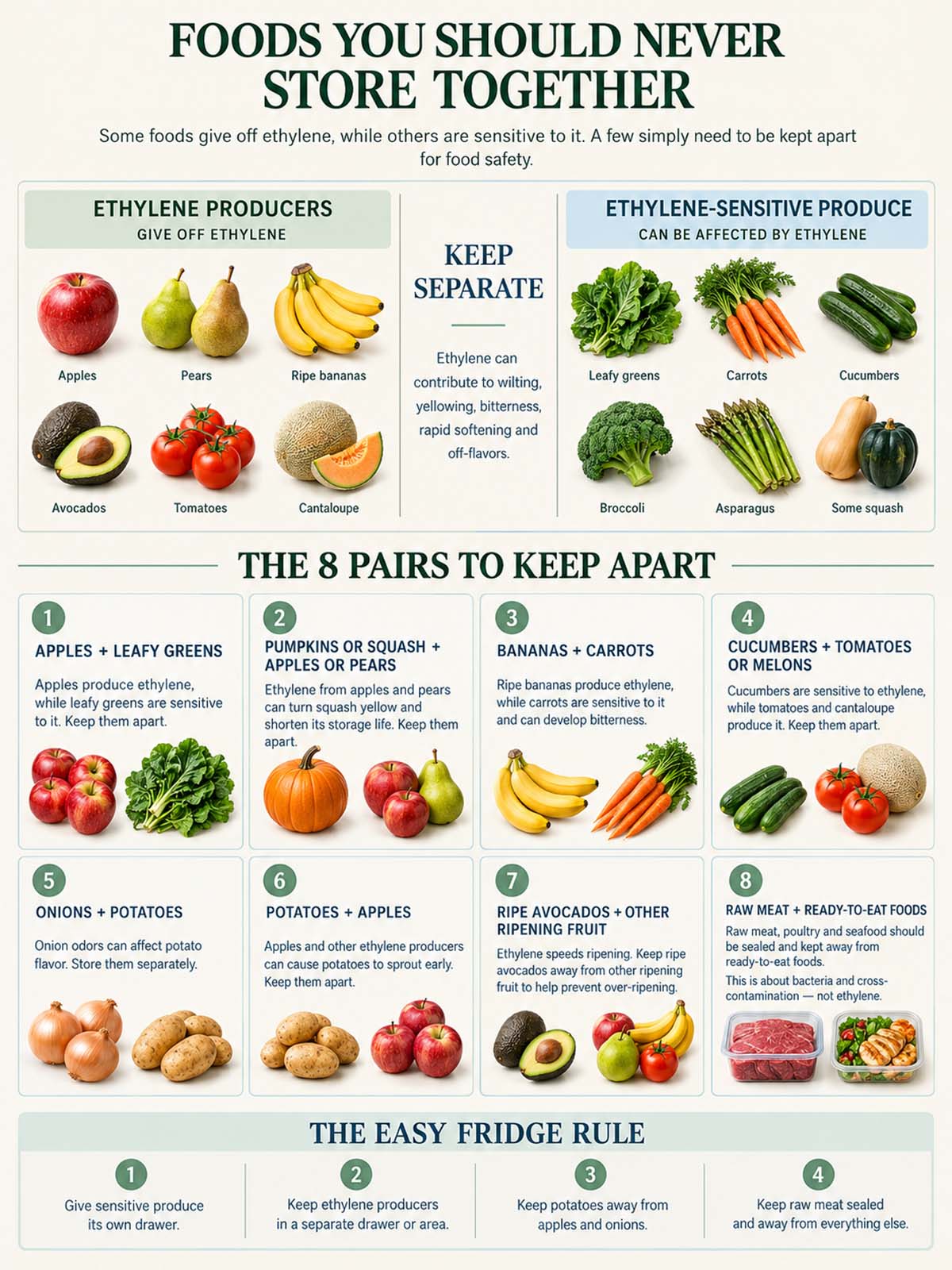
 That bag of apples in the crisper drawer may be the reason your lettuce is going limp. Here are the foods you should never store together, and what to do instead. For most of these pairs, the culprit is a natural gas called ethylene, which some fruit gives off and some produce reacts badly to. The last pair is about food safety instead.
The short answer: keep ethylene-producing fruit, such as apples, pears and ripe bananas, away from ethylene-sensitive produce like leafy greens, carrots, cucumbers and squash. Keep potatoes away from onions, garlic and ripening fruit. Keep raw meat sealed and apart from everything else.
Eight pairs to keep apart
1Apples and leafy greens
Verdict: keep them apart. The Penn State College of Agricultural Sciences explains that most fruits and some vegetables release ethylene, a gas with no color or smell, and that it can cause produce to wilt, spot or go bad even in the refrigerator. It lists apples and pears among the biggest producers, and lettuce, spinach and broccoli among the sensitive produce. Utah State University Extension says ethylene damage can include yellowing, loss of green color, bitterness, rapid softening and off-flavors.
Give your greens their own drawer, as our guide to how to store lettuce recommends.
2Pumpkins or squash and apples or pears
Verdict: keep them apart. Oregon State University Extension says not to store pumpkin or squash near apples, pears or other ripening fruit, because the ethylene can turn the squash yellow and shorten its storage life. If you have just brought one home from the pumpkin patch, our guide to how to pick a pumpkin covers choosing a good one, and a spot away from the fruit bowl will help it last.
3Bananas and carrots
Verdict: keep them apart. Penn State says bananas produce ethylene, but only once they are fully ripe, and it lists carrots and parsnips among the sensitive root vegetables. Utah State advises against storing ethylene-sensitive crops with producers such as apples, cantaloupe, bananas and tomatoes, and bitterness is one of the damage signs it lists. That fits our carrot storage guide, which warns that ethylene can turn carrots bitter.
Bananas often get blamed for spoiling everything in the kitchen, but the ripeness detail points to a narrower risk. In our reading, the problem is ripe bananas and other producers sitting near the sensitive group, not near every food you own.
4Cucumbers and tomatoes or melons
Verdict: keep them apart. Penn State lists cucumbers among the sensitive produce, while Utah State names tomatoes and cantaloupe among the fruit that produces ethylene. Our cucumber storage guide says to keep cucumbers away from tomatoes, apples, bananas, melons and pears, and our tomato storage guide makes the same point from the other side, advising that tomatoes stay away from greens and other ethylene-sensitive produce.
5Onions and potatoes
Verdict: keep them apart, mainly for flavor. The European Food Information Council says to store pota