

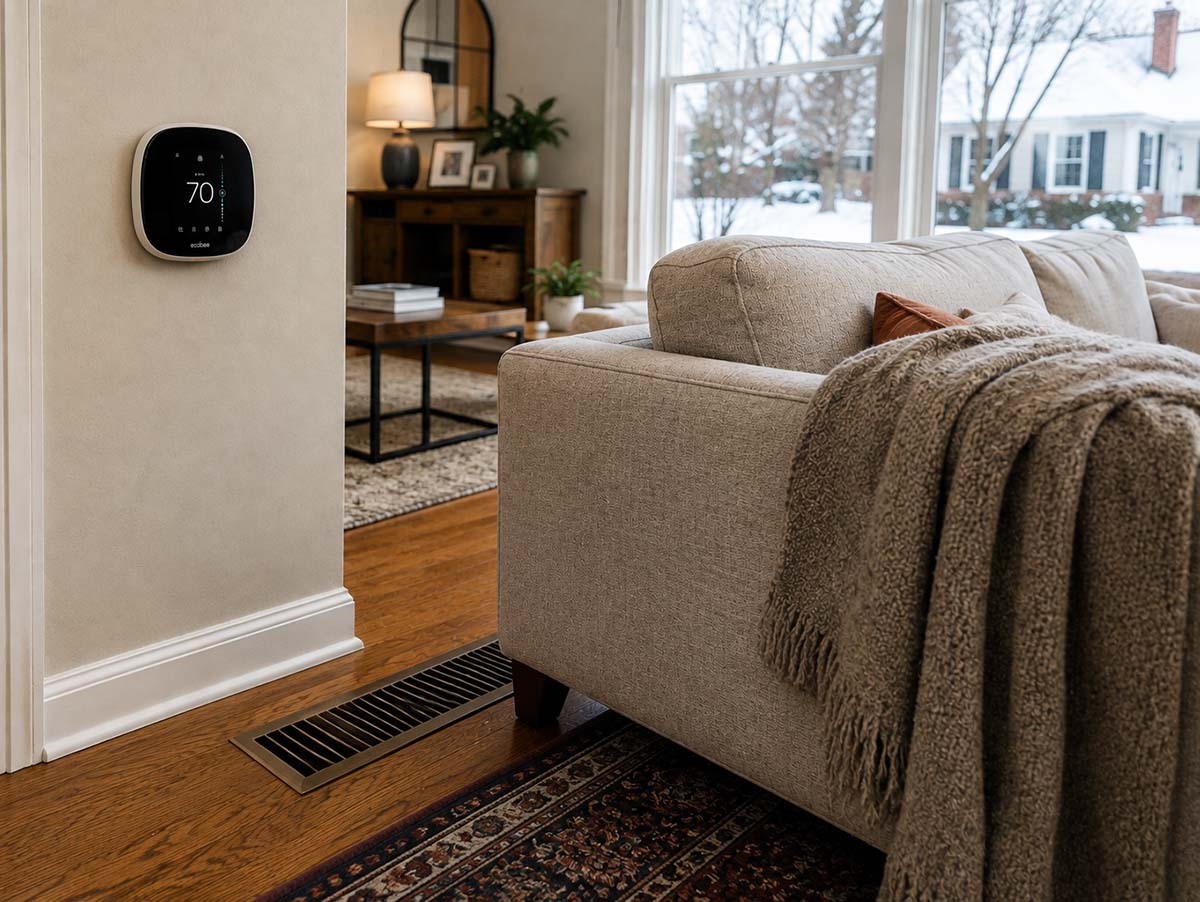
 Your thermostat says 70, but the room still feels chilly. Before you turn up the heat, check the small things. The mistakes that make your house feel colder than it is include furniture on a vent, a ceiling fan spinning the wrong way, curtains open at night and cold air slipping in around outlets. Here are six checks to run before winter, drawn from federal energy resources, ASHRAE and university Extension programs.
The short answer: keep supply and return vents clear, run your ceiling fan clockwise at low speed in winter, open south-facing curtains by day and close them at night, seal drafts around outlets and windows, deal with cold floors over unheated spaces and check your furnace filter every month. If rooms still feel cold after that, consider a professional assessment of air leaks, insulation, ductwork and the heating system.
Six things that can make your house feel colder
1Blocking vents with furniture or curtains
ASHRAE’s winter consumer tips says to make sure supply and return vents, radiators and baseboard heating units are not obstructed by furniture so warm air can spread through the room. Montana State University Extension’s home heating guide says not to block furnace supply and return vents, and warns that draperies and furniture blocking vents can create a fire hazard. A related habit is closing the vents in unused rooms. ASHRAE says you can turn down the thermostat in a room only if it is unoccupied, can be closed off and has its own heating zone, and not if it could affect the rest of the system or freeze water pipes. A trainer from the HVAC distributors’ group HARDI, quoted by Bob Vila, explains that a closed vent sends more air to the other vents but does not make the heater work less, and that the extra pressure can raise the risk of duct leaks. He calls closing vents counterproductive, with a different answer for systems that have separate zones.
Do this: pull sofas, beds and curtains back from every vent and return, and avoid closing registers in unused rooms. If your home has separate heating zones, adjust that zone’s thermostat instead of closing its registers, and ask an HVAC professional if you are unsure about your system.
2Running the ceiling fan the wrong way
Energy Star’s ceiling fan usage tips say to reverse the motor in winter and run the fan at low speed in the clockwise direction. It says this produces a gentle updraft that forces warm air near the ceiling down into the occupied space. In summer, it says to run the fan counterclockwise.
Energy Star also says to follow the manufacturer’s instructions.
Do this: use your fan’s reverse or winter setting, which is clockwise as seen from below, and set it to low. The goal is a gentle updraft, not a breeze directly under the blades. If it feels strong, lower the speed.
3Leaving curtains open at night and closed by day
The Minnesota Department of Commerce’s fall and winter energy tips say to open curtains on south-facing windows during the day so


