 I was slicing beets for a salad in a white button-down I’d forgotten to change out of, and a single careless cut sent a thin purple line straight across my sleeve. I remember thinking it wasn’t a big deal, since beet juice is just water with color in it, and water washes out. I finished cooking, ate dinner, and tossed the shirt in with the regular laundry that night without a second thought. It came out of the wash with a faint but very much still-there magenta shadow exactly where the splash had landed. Water-soluble, it turns out, is not the same thing as easy to remove.
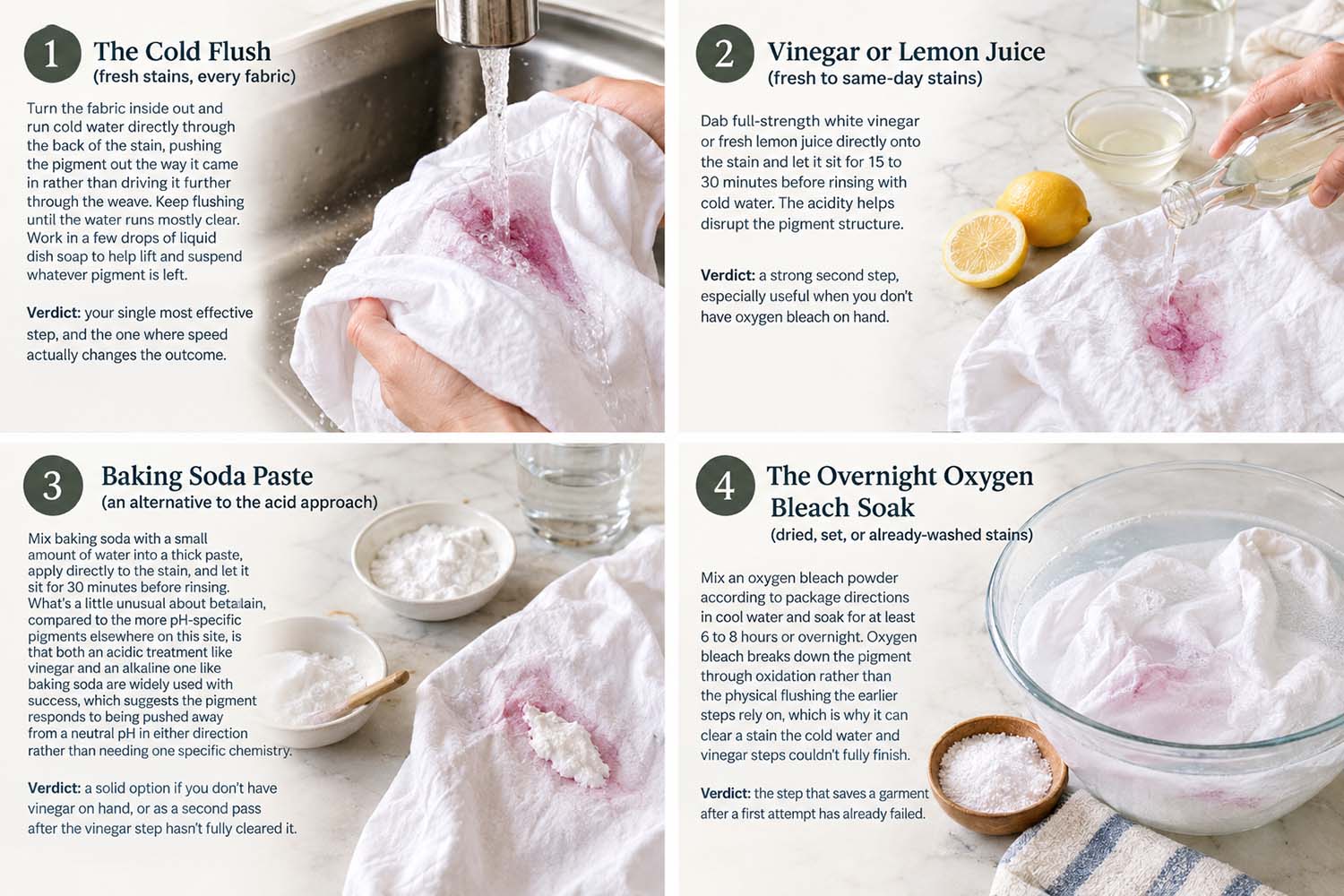
The Short Answer: Flush the stain from the back with cold water immediately, since speed matters more here than with almost any other stain on this site. Follow with dish soap or a vinegar or lemon juice treatment while it’s still fresh. For anything dried or set, soak in an oxygen bleach solution rather than repeating the same rinse. Never use hot water or the dryer until the stain is fully gone, and don’t assume a normal wash cycle will finish the job just because the pigment is water-soluble.
Why Beet Stains Don’t Behave the Way You’d Expect
Beets get their color from betalains, a pigment family that’s chemically distinct from the tannins in wine and coffee or the anthocyanins in berries, both of which this site has already covered. The defining trait of betalains is that they’re extremely water-soluble, far more so than either of those other pigment families. Most guides treat that as good news, and technically it is. It’s also exactly what makes beet stains deceptive.
Because betalain dissolves so readily, it doesn’t sit on the surface of the fabric the way an oil-based stain does. It gets carried into the porous structure of the fiber almost immediately, the same way water soaks into a napkin. As that moisture evaporates, the pigment stays behind, now concentrated into a smaller, more visible area than the original splash. That’s why a beet stain so often looks worse the next morning than it did the moment it happened, and why “it’s just juice, it’ll wash out” is the wrong instinct.
The Golden Rule: Water-Soluble Doesn’t Mean Harmless. It Means Fast.
Here’s what separates a beet stain from almost everything else in this cluster. Being water-soluble means speed is genuinely your best weapon, more so than with a wine or berry stain, since a fast, thorough cold flush can carry a huge share of the pigment back out before it has time to concentrate into the fiber. But that same solubility means a slow response works against you faster than it would with a less soluble pigment. Every minute the stain sits and dries, more of that pigment is settling into the weave rather than sitting on top of it, waiting to be rinsed away.
Stain Variants: Fresh, Dried, and Cooked-In
Fresh, still wet: This is the easiest case by far. A fast, thorough cold water flush from the back of the fabric handles most of the pigment before it has time to concentrate.
Dried
How to Get Beet Stains Out of Clothes. Here’s What Works!