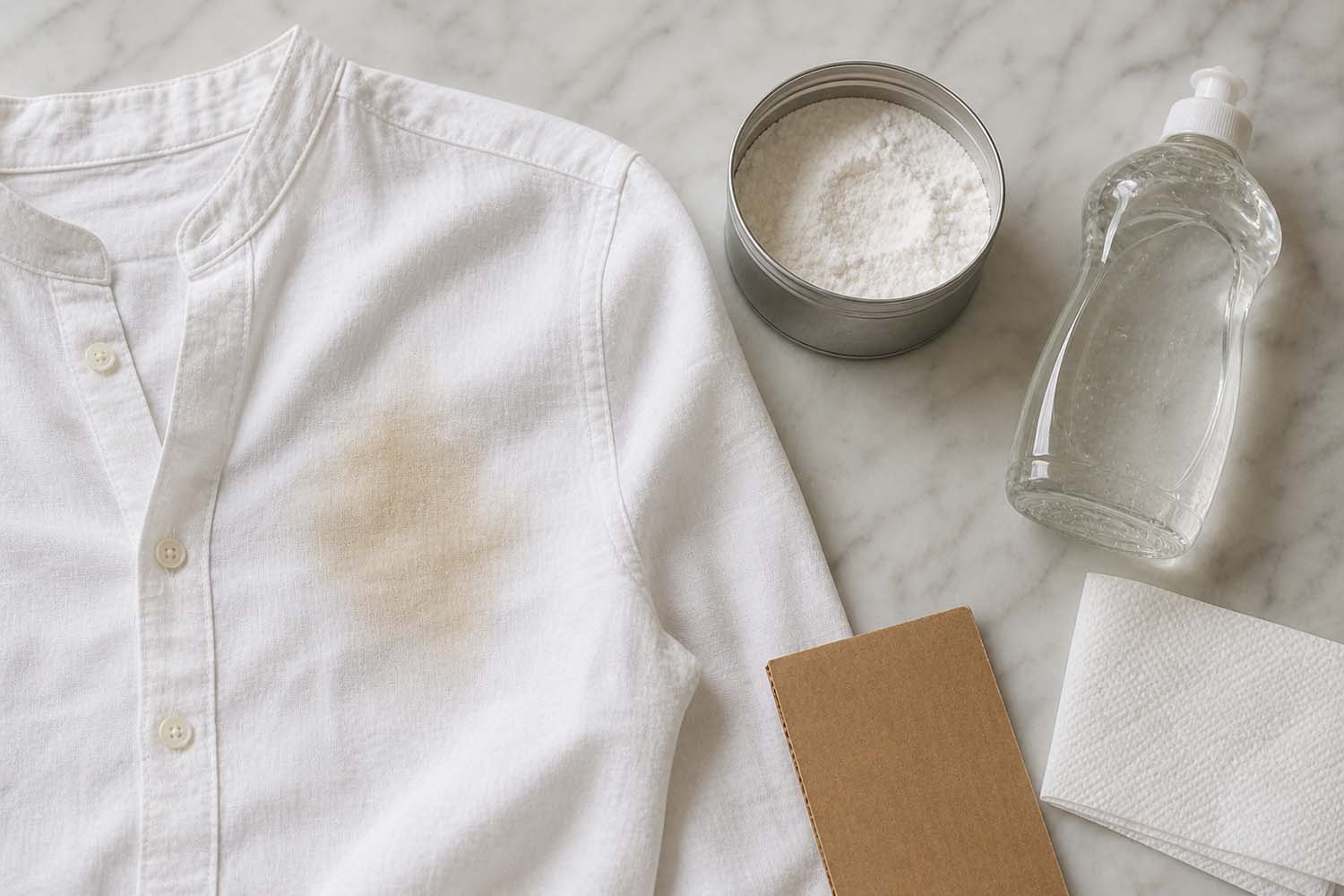
 It was Thanksgiving, and I was basting the turkey like I knew what I was doing.
I absolutely did not know what I was doing, which is how I ended up with a generous splash of melted butter down the front of my good linen shirt twenty minutes before guests arrived. My instinct was immediate and completely wrong: I grabbed a wet paper towel and started dabbing at it with cold water.
The stain got worse. Not a little worse. Noticeably, visibly, spreading-across-the-fabric worse.
What I didn’t know yet is that butter is not a food stain in the way that tomato sauce or red wine is a food stain.
Butter is a fat stain. And fat stains have a specific, non-negotiable rule that applies before anything else: no water first. Ever. Water drives fat deeper into fabric fibers instead of lifting it. Every wet dab I gave that stain was pushing the butter further in and making the eventual removal harder.
Once I understood that, the rest of the process made sense. Here’s what actually works.
The Short Answer: How to Get Butter Out of Clothes
Do not use water first. Scrape off any solid butter, then cover the stain generously with an absorbent powder (cornstarch, baking soda, or talcum powder) and let it sit for at least 30 minutes to draw the fat out of the fiber. Brush it off, apply liquid dish soap directly to the dry stain, work it in gently, and let it sit another 10-15 minutes before rinsing. Launder in the warmest water the fabric allows. Check the stain before the dryer. Heat sets fat stains permanently.
Why Butter Stains Are Different From Most Food Stains
Butter is an emulsion of fat (lipids), milk proteins, and a small amount of water. When it hits fabric, the fat component is what causes the problem. Fat behaves very differently from the water-soluble stains most people are used to treating.
Most food stains dissolve in water. That’s why cold water is the first move for red wine, tomato sauce, or berry stains. Fat doesn’t dissolve in water. It’s hydrophobic, meaning it actively repels it. Adding water to a fresh butter stain doesn’t loosen the fat; it fails to interact with it at all and can spread it outward across more fibers. Water also dilutes whatever surfactant you apply next, reducing its ability to break the fat-fiber bond. This is the core reason why the instinct to immediately rinse a butter stain makes it worse, not better.
The correct approach works in the opposite direction. Instead of adding liquid, you start by removing fat using an absorbent powder that draws the grease out of the fiber through adsorption: the powder’s porous particles physically attract and bind fat molecules to their large surface area, pulling grease up and out of the fabric dry, before any liquid touches the stain. Once the absorbent has pulled as much fat as possible out of the fabric, dish soap goes on next, also applied dry, because dish soap is a surfactant specifically designed to break the bond between fat and the surface it’s clinging to. Wate