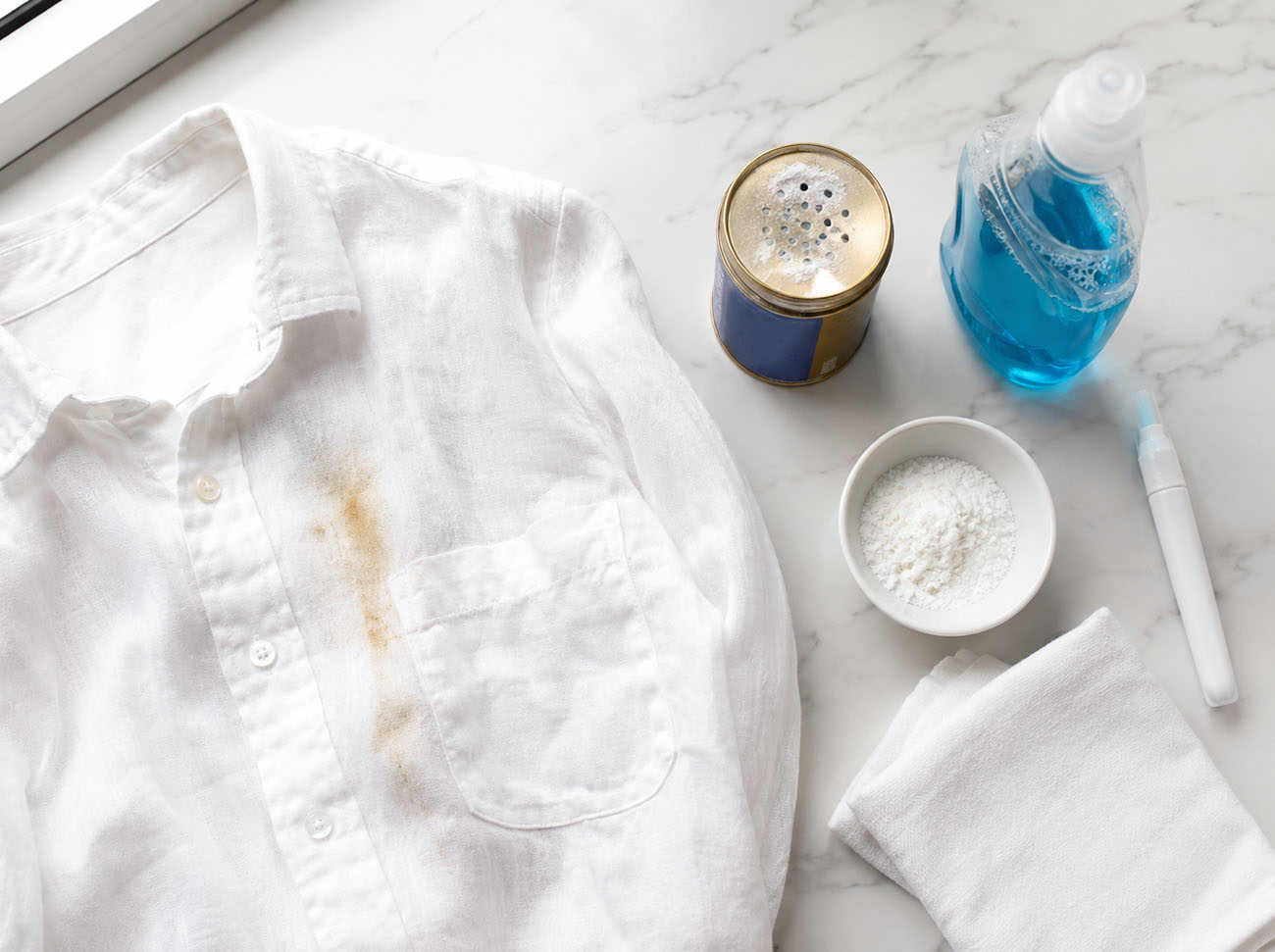
 It was Memorial Day weekend, and I was doing everything right.
Sunscreen applied before getting dressed. Hat on. The whole responsible adult routine. I was wearing a white linen shirt over my swimsuit, grabbed the bottle to reapply on my arms, and a long white streak of mineral sunscreen transferred directly onto the front of the shirt before I even realized what had happened.
My instinct was the same one I always have: wet cloth, cold water, blot it out. The white streak lightened. I thought I’d handled it. I threw the shirt in the wash that evening with everything else.
The next morning I pulled it out of the machine and found an orange stain I had never put there.
I stood in the laundry room genuinely confused for about thirty seconds before I started researching. What I found explained both the white streak and the orange stain, and it also explained why treating them the same way is exactly the wrong approach. The type of sunscreen you’re wearing determines what kind of stain you’re dealing with. And the orange stain that appears after washing is one of the more chemically interesting laundry problems most people will ever encounter.
Here’s everything I learned.
The Short Answer: How to Get Sunscreen Out of Clothes
The treatment depends on the type of sunscreen. For chemical sunscreen (avobenzone-based): treat the oily stain before washing. Use dish soap or absorbent powder dry first, then rinse cold. Pre-treating is critical because avobenzone reacts with iron in water during the wash cycle to create orange rust stains that weren’t there before. For mineral sunscreen (zinc oxide or titanium dioxide): brush off dry residue first, then dish soap, warm wash. Never use chlorine bleach on any sunscreen stain. It permanently sets both the oil and the orange rust discoloration. Check before the dryer. Heat sets sunscreen stains permanently.
Why Sunscreen Stains Are Different From Other Stains
Most food and fabric stains are passive. They sit on the fabric and wait for you to deal with them. Sunscreen stains are more complicated for two reasons.
First, sunscreen is engineered to resist water. That’s the point of it. Water-resistant, sweat-proof formulas are designed to stay on your skin through swimming and activity. Those same properties make sunscreen cling to fabric fibers in a way that most food stains don’t. The oils in sunscreen are not going to rinse out the way tomato sauce or coffee might. They need a surfactant to break the bond.
Second, chemical sunscreens containing avobenzone create a stain that doesn’t fully appear until after you wash the garment. Avobenzone is a UV filter that reacts with iron particles in tap water, particularly in areas with hard water, to produce rust-colored orange compounds during the wash cycle. According to CBS News, which reported on this widely in 2024, Tide confirmed that avobenzone “can react with iron in hard water, leaving behind rust-colored stains” on clothing. The orange stain y