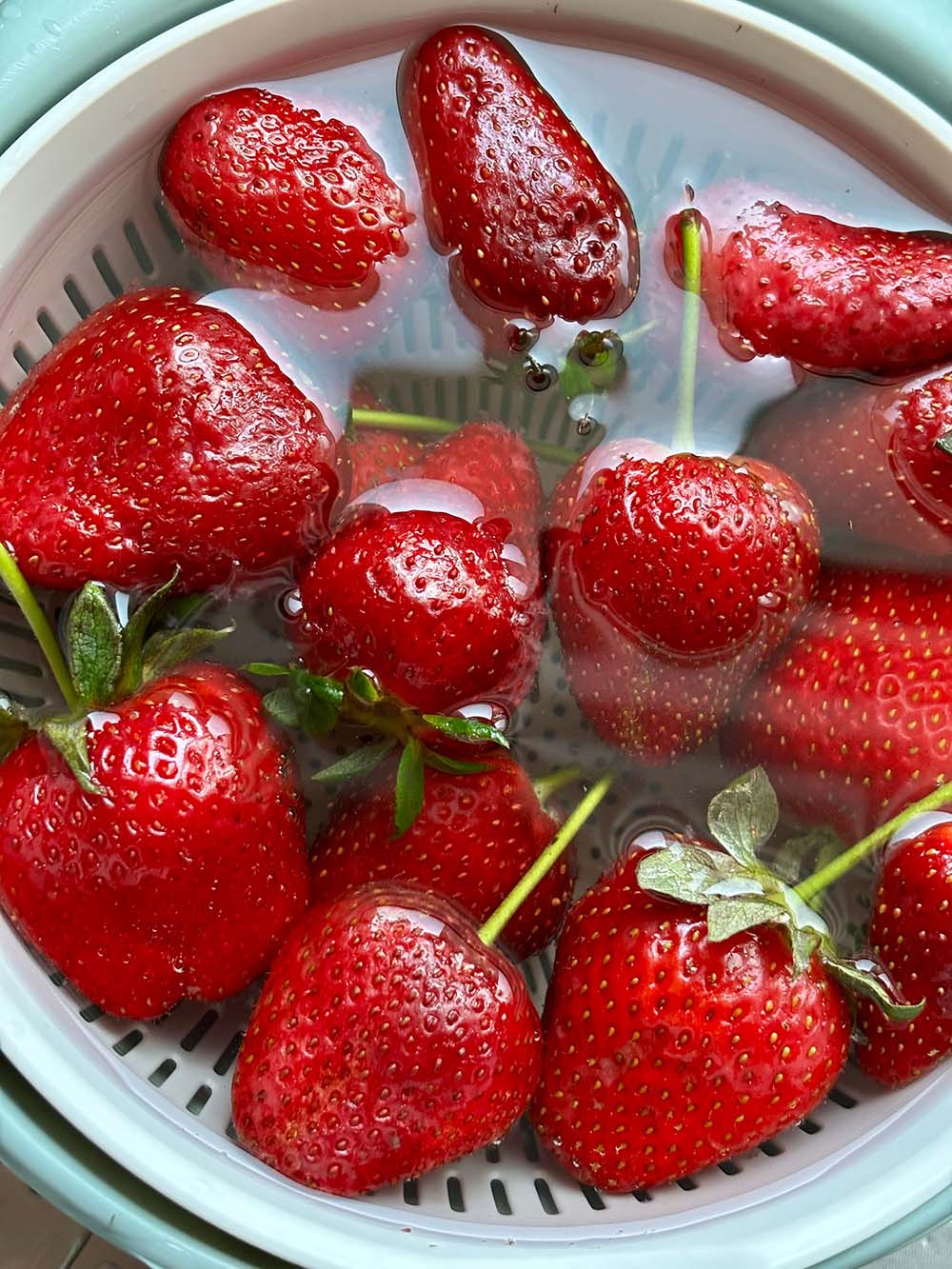
 Most people rinse strawberries under cold water for a few seconds and consider the job done. That works. But there are two things worth knowing that most people do not: washing strawberries before storing them is one of the most common mistakes in produce handling, cutting shelf life significantly before you even start. And if pesticide residue is a concern, running water alone is not the most effective method available to you. Both are fixable with information you probably do not have yet.
How do you wash strawberries?
The short answer: Rinse strawberries under cool running water immediately before eating or using them, not when you bring them home. Do not remove the stem or hull before washing. Do not use soap, detergent, or commercial produce wash. For better pesticide removal, a baking soda soak (1 teaspoon per 2 cups of water, 12 to 15 minutes for most complete results) outperforms plain water, while a vinegar soak (1 part white vinegar to 3 parts water, 5 minutes) helps reduce surface bacteria and extend shelf life. Always dry thoroughly before refrigerating.
For how long strawberries last and how to store them after washing, see our companion post: how to store berries. For a complete produce storage reference, see our Food Storage Guide.
How to Wash Strawberries: At a Glance
When to wash
Immediately before eating, not on arrival
Basic method
Cool running water, 30 to 60 seconds
Best for pesticides
Baking soda soak (1 tsp per 2 cups water, 12-15 min)
Best for bacteria and shelf life
Vinegar soak (1:3 ratio, 5 minutes, rinse well)
Never use
Soap, detergent, or commercial produce wash
Hull removal
After washing, not before
Drying
Always dry before refrigerating
Key Takeaways
The FDA advises washing strawberries immediately before eating or using them, not when you first bring them home. Pre-washing introduces moisture that accelerates mold growth and can cut shelf life in half.
Never remove the stem or hull before washing. Water and cleaning solutions enter the berry through the stem opening, diluting flavor, softening texture, and washing away nutrients.
Do not use soap, dish detergent, or commercial produce wash on strawberries. The FDA explicitly advises against this: these products can be absorbed into the porous fruit and are not intended for internal consumption.
Baking soda is among the most effective home methods for removing surface pesticide residues. A 2017 study in the Journal of Agricultural and Food Chemistry (UMass Amherst) found baking soda solution outperformed both plain water and bleach for pesticide removal from apple surfaces, with the lead researcher noting the method is applicable to other fruits. The study found 12 to 15 minutes of soaking achieved the most complete surface removal.
Strawberries appear on the Environmental Working Group’s Dirty Dozen list every year, meaning they are among the conventionally grown produce items most likely to carry detectable pesticide residues. If pesticide