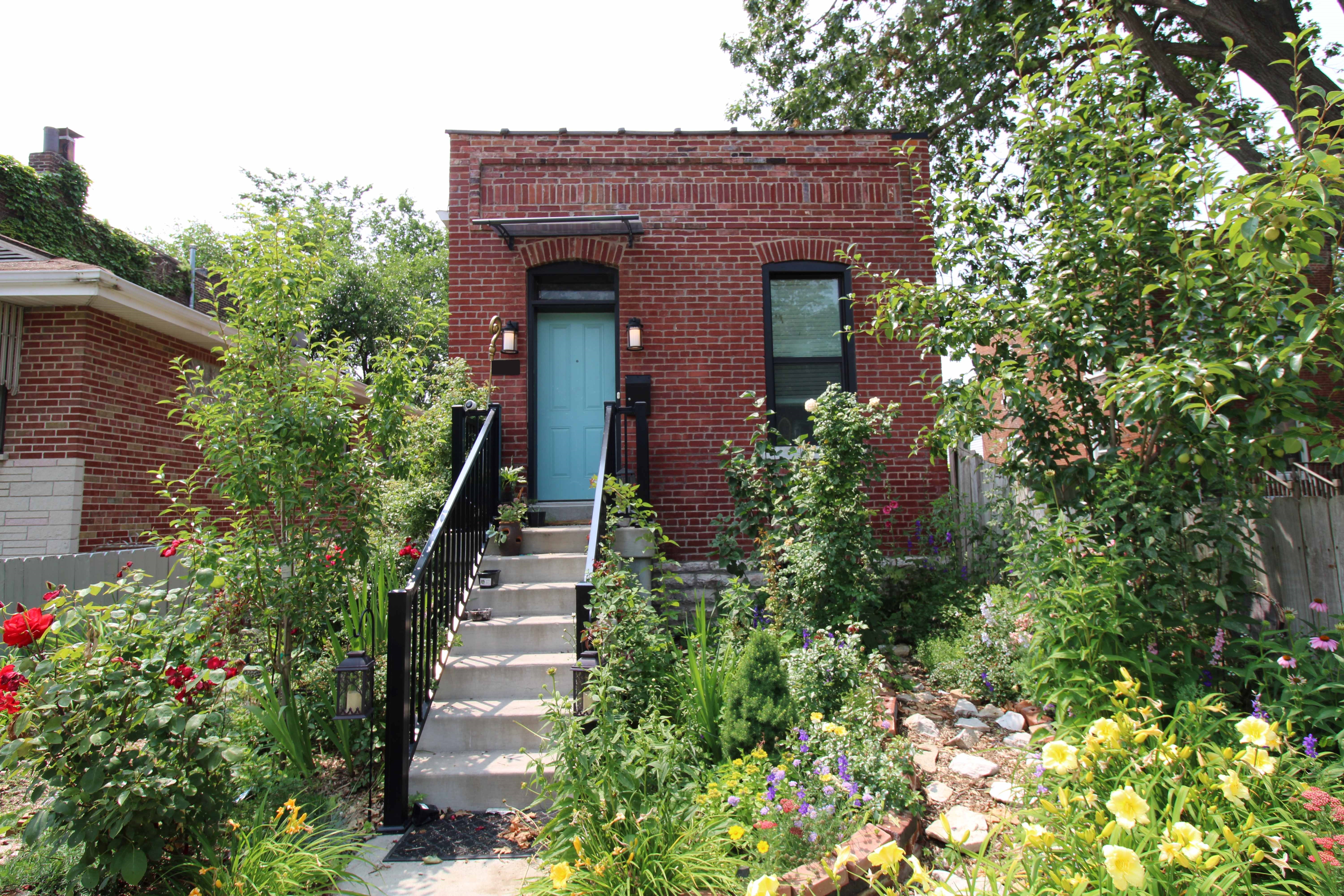
Innovative Partnership in Gravois Park Transforms Vacant Properties into Affordable Homes for Artists
By Michelle Kim, Washington University Gephardt Institute for Civic and Community Engagement 2025 St. Louis Fellow
In Gravois Park, a groundbreaking collaboration is revolutionizing the concept of community development, one home at a time. The STL Art Place Initiative (STL API), in partnership with the Community Development Administration (CDA), is leading the charge to convert abandoned properties into affordable and aesthetically pleasing homes for local artists. This initiative was sparked by the 2018 Gravois-Jefferson Historic Neighborhood Plan and was co-founded in 2019 by the Incarnate Word Foundation, Kranzberg Arts Foundation, and the Regional Arts Commission. With a clear mission to “build wealth for artists through homeownership and transform vacant spaces into cultural assets with communities,” STL API is guided by eight core values, including preserving both artist and community wealth, co-designing with residents, and amplifying underrepresented voices.
Redefining “Artist” and Prioritizing Community in Housing Development
At the heart of STL API’s model is their inclusive definition of an artist, which encompasses anyone actively engaged in a creative practice. Together with the CDA, they are proving that housing development can be about more than just physical structures – it can also preserve culture and promote neighborhood stability. In 2019, with support from the City of St. Louis, STL API acquired 25 vacant and deteriorating parcels in Gravois Park from the City’s Land Reutilization Authority (LRA). Their goal is to create 20 homes over the next 3-5 years, not as speculative real estate, but as permanent residences for artists who are already part of the community.
Affordable Homes Tied to Cultural Asset Land Trust
What sets STL API’s construction and housing model apart is its focus on centering artists and their creative practice in every aspect of development. Applicants are selected holistically, with a strong emphasis on artists who are actively involved in their communities. Each home is sold below market rate and tied to a cultural asset land trust, which includes deed restrictions to ensure long-term affordability. The home prices are determined by the area’s median income, and future resale is structured to maintain accessibility and community value.
Building Community Through Collaboration
While construction is a crucial aspect of STL API’s vision, their ultimate goal is to build a strong and connected community. This is where their partnership with the CDA has been instrumental, empowering the organization to prioritize design and livability. From predevelopment to construction, CDA funding and collaboration have played a vital role in bringing STL API’s vision to life. Together, they have refined the grant process to better support mission-driven organizations and create long-term community impact.
Looking Towards the Future
“The beauty of working with the CDA is that it’s not just transactional – it’s a partnership,” says Kaveh Razani, co-director of STL API. “They’re helping us think beyond the immediate build and towards long-term community impact.” This partnership between STL API and the CDA serves as a model for how organizations can work together to create meaningful and sustainable change in their communities. With their innovative approach to housing development, STL API is reshaping what community development looks like and setting a new standard for inclusive and community-focused initiatives.