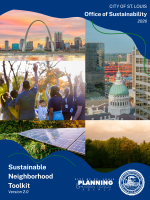
 The Office of Sustainability has released the 2026 Sustainable Neighborhood Toolkit, Version 2.0 (the Toolkit). Designed to complement the City’s 2025 Sustainability and Climate Plan (SCP), the Toolkit provides practical, community-driven strategies to help residents advance sustainability in their neighborhoods. What’s Included in the ToolkitThe Toolkit features 16 actionable community tools aligned with the three overarching pillars of the SCP:Promote a Safe, Healthy, and Climate-Resilient City: Guidance on planting trees, establishing community gardens, creating healthy corner stores, installing rain gardens or bioswales, and using rain barrels.Expand City and Community Capacity for Climate Resilience: Steps to build recycling outreach programs, support community tool libraries, create bike hubs, organize walking school buses, host fitness groups and clean-up events, repurpose vacant lots, and start neighborhood safety initiatives.Advance Energy Efficiency While Reducing Energy Burden: Instructions for adopting cool roofs, improving home energy efficiency, and preparing for extreme weather with neighborhood contact lists.Each section explains how the proposed initiative can benefit the community, its associated time and financial costs, alignment with the SCP, planning and maintenance tips, resources for getting started, and local St. Louis examples. Behind the ProjectThe updated toolkit fulfills Priority Action F.2 of the SCP. Version 2.0 is a complete redesign of the original Toolkit and builds upon the goals and strategies outlined in the City’s 2025 Sustainability and Climate Plan.The Toolkit was researched, written, and designed by undergraduate Impact Intern Sophie Beltran of Washington University in St. Louis, in collaboration with Sustainability Director Elysia Russell and Sustainability Manager Shawn Finnegan.
Sustainable Neighborhood Toolkit, V2.0