

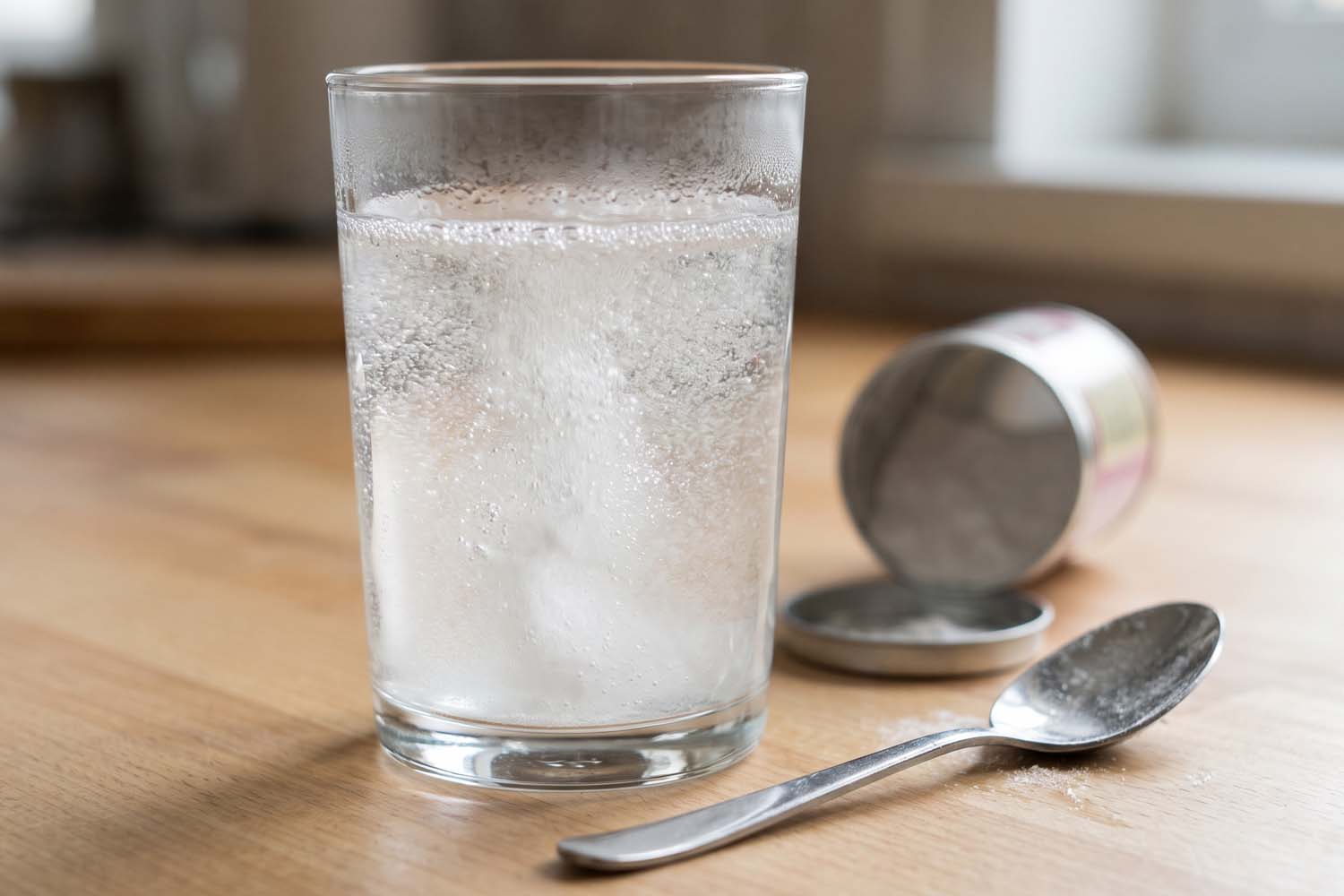
 A baking powder test takes seconds and can help explain flat muffins, biscuits and cakes. If a recipe that normally rises turns out dense, checking your leavener is one useful troubleshooting step before you change the recipe. Baking powder, baking soda and yeast do different jobs, and each has a simple kitchen test to show whether it still works.
Quick overview: to test baking powder, stir 1 teaspoon into 1/3 cup of warm to hot water. If it bubbles, it still has rising power, per Michigan State University Extension and Iowa State University Extension. To test baking soda, add vinegar and look for fizzing. To test dried yeast, mix it with sugar and warm water and wait 10 minutes for foam.
How to test baking powder, baking soda and yeast at a glance
Leavener
The test
A pass looks like
Baking powder
1 teaspoon in 1/3 cup warm to hot water
Obvious bubbling
Baking soda
1 1/2 teaspoons with 1 tablespoon of vinegar
Fizzing
Dried yeast
1 envelope (2 1/4 teaspoons) with 1 teaspoon sugar in 1/4 cup warm water, 10 minutes
Foam that reaches the 1/2 cup mark
These methods come from university Extension services, which differ slightly on amounts and water temperature. We note where they do.
How to test baking powder
Measure 1 teaspoon of baking powder into a clear glass.
Pour in 1/3 cup of water. Iowa State University Extension says hot water and Michigan State University Extension says warm water, so use water that is warm to hot, not cold.
Watch the glass. Michigan State Extension says the mixture will bubble if the baking powder is still of good quality and has good rising power.
If you see little or no reaction, replace it for baking. A clear bubbling reaction is the sign you want. Our full guide covers how long it lasts: does baking powder go bad.
How to test baking soda
Measure 1 1/2 teaspoons of baking soda into a small bowl.
Add 1 tablespoon of vinegar.
Look for fizzing. Michigan State University Extension says if it fizzes, it is still potent and usable.
Other Extension sources use different amounts. Iowa State University Extension, for example, uses 1 teaspoon of baking soda with 3 tablespoons of vinegar and also looks for bubbling. See our guide to whether baking soda goes bad for storage tips.
How to test dried baking yeast
In a liquid measuring cup, dissolve 1 teaspoon of sugar in 1/4 cup of warm water, about 100 degrees F.
Stir in 1 envelope of dried yeast (2 1/4 teaspoons) and let it stand for 10 minutes.
Check the foam. University of Arkansas Extension, citing Utah State Extension, says the yeast is active if it foams to the 1/2 cup mark.
If the mixture stays flat, it is time for a fresh packet. Read more in does yeast go bad.
What a failed test looks like
A pass means active bubbles or foam. A fail means little or no reaction from baking powder or baking soda, or little to no foam from yeast after 10 minutes. The easiest way to judge is to run the test on a fresh container and an older one side by side. Our practic


