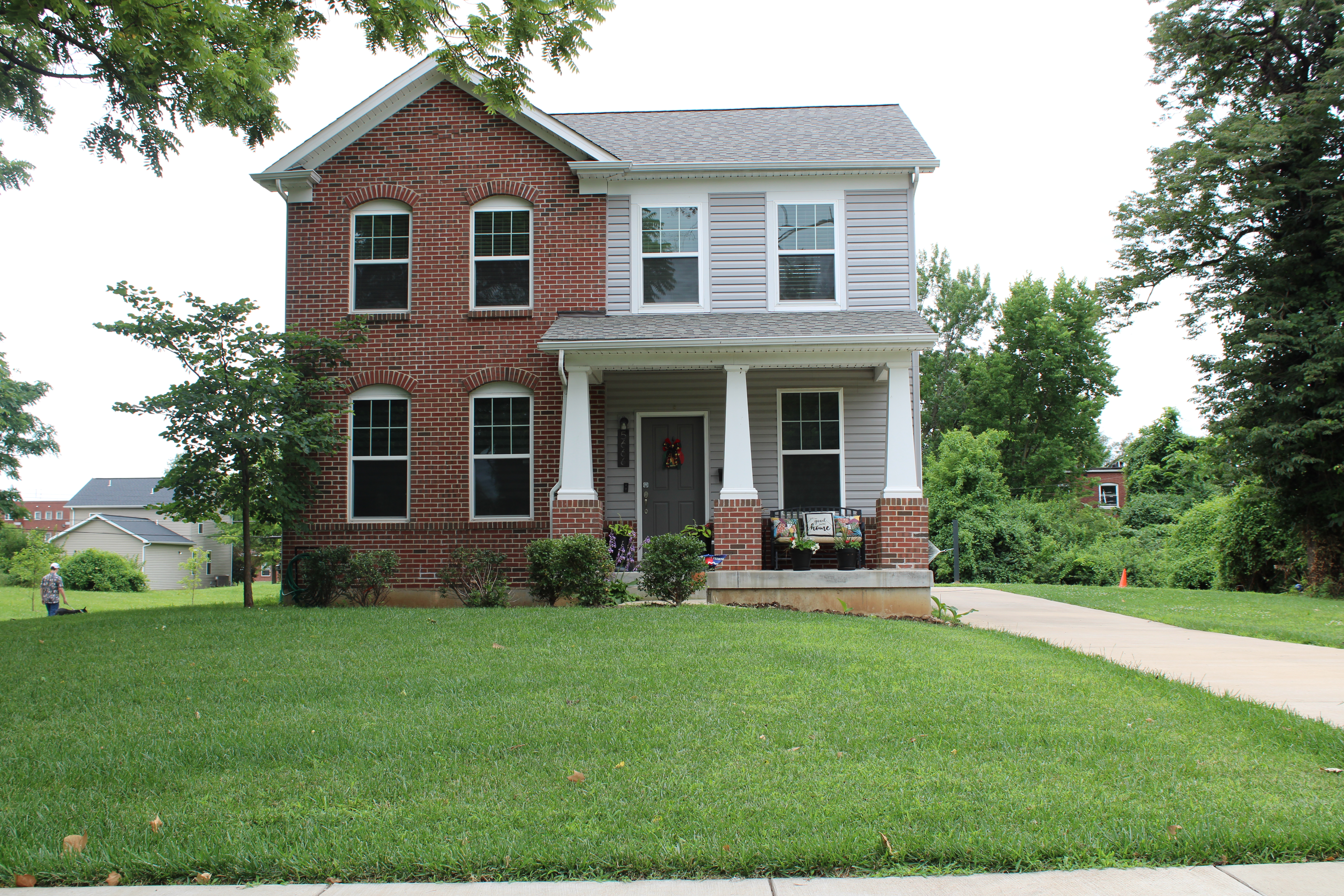
 By Akima Garner, Washington University Gephardt Institute for Civic and Community Engagement 2026 St. Louis FellowFor years, empty lots and vacant properties have been scars and reminders of the “Delmar Divide”. Homebuilder CF Vatterott has spent more than two decades transforming these vacant spaces.Since the 1990s, this St. Louis-based company has been acquiring Land Reutilization Authority (LRA) lots and building new homes designed to blend into the surrounding neighborhoods. With support from the Community Development Administration (CDA), CF Vatterott has worked north of Delmar Ave. on streets such as Enright, Cabanee, Clemens, and Cates in the City’s West End Neighborhood. Now they are turning their attention to Vernon Avenue, where they plan to build seven new homes.A finished single-family home by CF Vatterott. Many of the lots the CF Vatterott takes on still contain the buried debris of demolished homes, requiring crews to excavate before any new construction can begin. It adds cost, but CF Vatterott continues working to provide for the community.The homes that CF Vatterott builds are also carefully designed to match the character of what already exists on each block. In neighborhoods where many properties sat vacant for 30 or more years, CF Vatterott invests significant time and resources into ensuring new construction does not feel out of place or too modern. The goal, according to company president Greg Vatterott Jr., is to build homes that will last another 20 to 40 years with their classic look. A carpenter working on homes along Vernon Avenue.Ripple Effect of Neighborhood Transformation Another goal that Greg Vatterott Jr. expressed was the hope that a growing trend can become apparent with their progress. As new homes are built, they create comparable sales data that neighboring homeowners can use to access financing. Vatterott hopes that as homes rise on Vernon Avenue, owners of adjacent properties will be able to invest in their own properties, thereby strengthening the whole block. When comparable home sales increase property values, existing homeowners gain equity that can be used for home repairs, renovations, and other investments. Higher property values also create stronger comparable sales, giving lenders greater confidence to finance new construction and vacant home rehab projects. This ripple effect attracts private investment, reduces vacancy, encourages new home construction, and welcomes more residents to the neighborhood.A finished single-family home by CF Vatterott. Homeowners build wealth through rising equity, construction companies create jobs, lenders originate new mortgages, and the City benefits from a growing tax base and increased neighborhood stability. In the West End neighborhood, this transformation has been so significant that, beginning with the 2020 Census, the area no longer qualifies as a Qualified Census Tract (QCT), an important federal indicator of the neighborhood’s economic progress.
From Vacant Lots to New Homes: CF Vatterott Rebuilding the West End