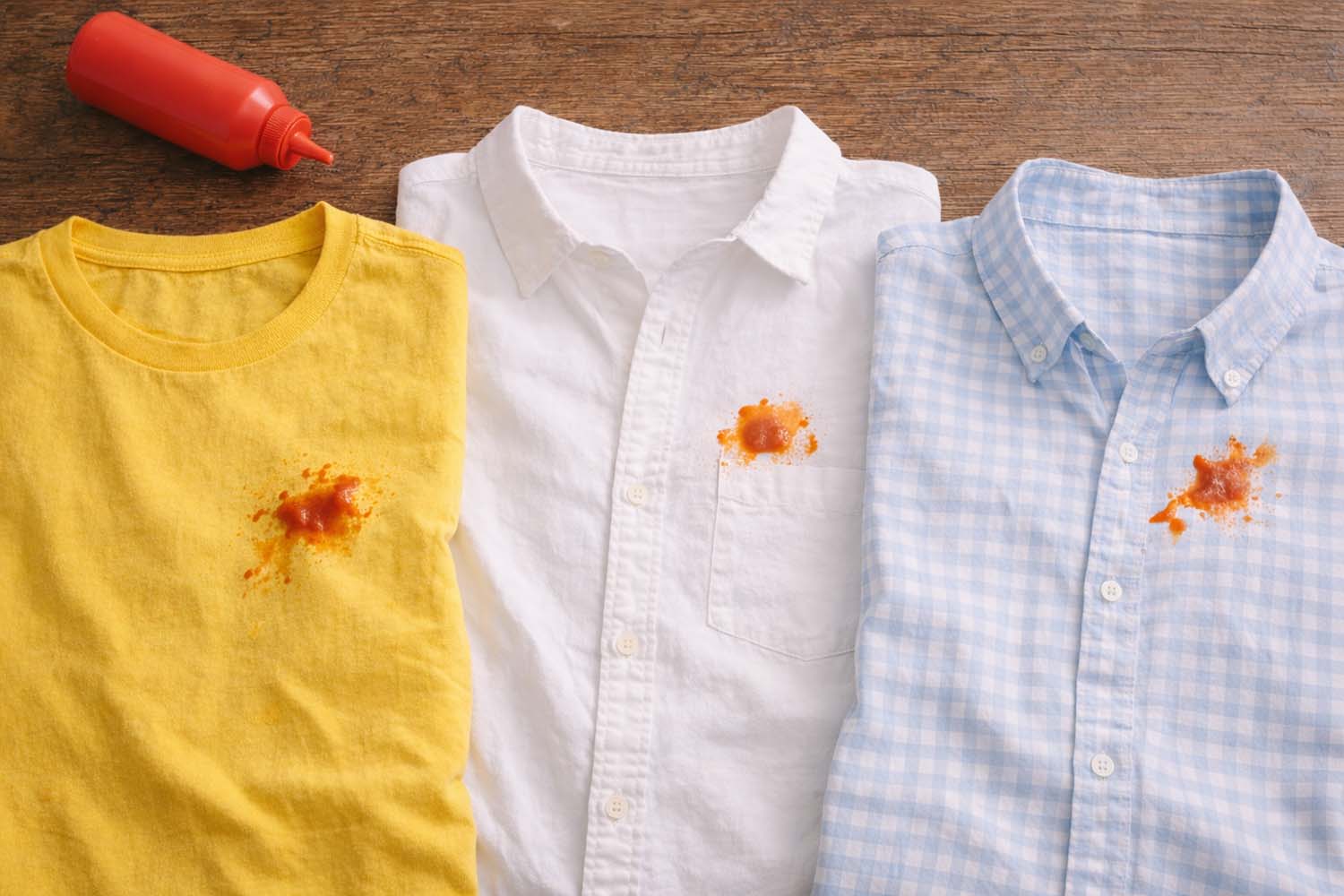
 Learning how to get ketchup out of clothes is one of those skills you pick up the hard way, usually at a summer barbecue, usually on something you care about, always at the worst possible moment.
Mine was a July Fourth burger. One squeeze too many, a broken bottle seal, and suddenly my white Oxford had a bright red stripe across the chest. I grabbed a napkin and rubbed. That was mistake number one.
Here’s the thing about ketchup stains that most guides don’t bother to explain: ketchup isn’t just watery tomato sauce. It behaves differently on fabric, sets faster, and has one component that most tomato-based stains don’t have. If you treat it the same way you’d treat marinara, you’ll get worse results. I know because I tested both, deliberately, on the same fabrics, side by side.
I ran the same systematic testing I used for tomato sauce and red wine: stained fresh shirts, let some dry, put some through the dryer, tested every method I could find, and ranked them honestly.
Here’s what I learned.
Quick Answer: How to Get Ketchup Out of Clothes: Scrape off the excess. Don’t rub. Flush cold water through the back of the fabric immediately. Apply dish soap directly to the stain and work it in gently for two minutes. Soak in a white vinegar and cold water solution for 20 to 30 minutes. For white fabrics, follow with hydrogen peroxide and dish soap. Launder in cold water. Never put it in the dryer until the stain is completely gone. Ketchup’s sugar content means heat sets it fast and hard.
Why Ketchup Stains Differently Than Tomato Sauce
Most people assume ketchup and tomato sauce are essentially the same stain. They share the same lycopene pigment, the same red color, the same basic tomato base. But ketchup has two ingredients that change how it behaves on fabric, and understanding them changes how you treat it.
Sugar: Ketchup contains significantly more sugar than tomato sauce. Most commercial ketchups are around 25% sugar by weight. A single tablespoon of Heinz contains 4 grams of sugar, which adds up quickly when a real spill hits fabric. Sugar is hygroscopic, meaning it pulls moisture from the air and bonds tightly with fabric fibers. More critically, sugar caramelizes when exposed to heat, which means a ketchup stain that goes through a warm or hot wash, or any time in the dryer before it’s fully removed, can turn brown and bond to fabric at a molecular level. This is why speed matters more with ketchup than almost any other condiment stain.
Vinegar: Ketchup already contains acetic acid, the same compound as white vinegar. This slightly aids the breakdown of the lycopene pigment, but it also means the stain’s pH is already working against you, accelerating how quickly the pigment cures into natural fibers like cotton and linen.
Lycopene (the red pigment): Shared with tomato sauce. Fat-soluble, water-resistant, requires a surfactant like dish soap or an oxidizer like hydrogen peroxide to break the bond with fabric fibers. The