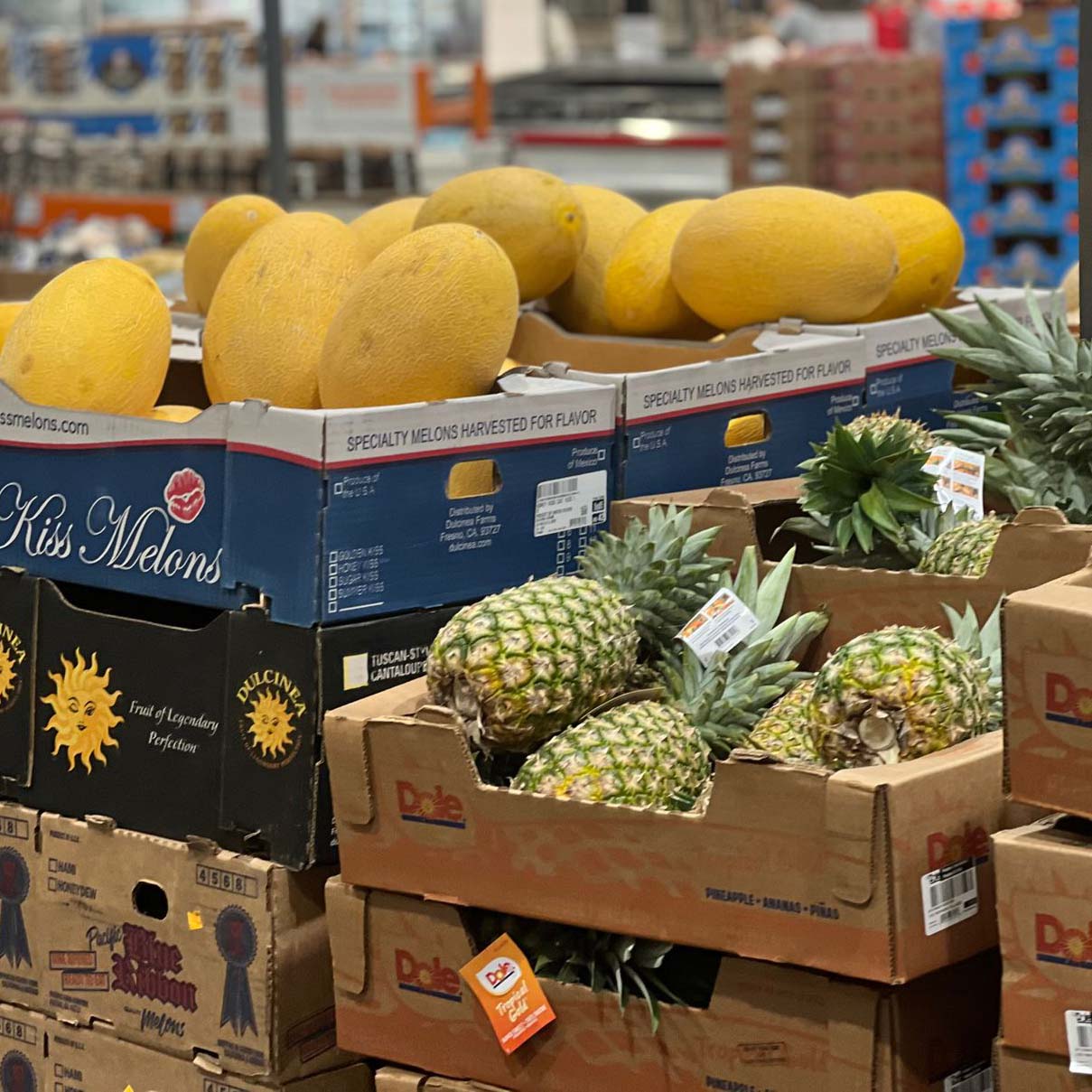
 A pineapple can look golden, smell fine and still disappoint you when you cut it open. The trick is not to rely on color alone. Here is how to pick a ripe pineapple, based on USDA and university extension guidance, and why the popular leaf-pull test isn’t on the list.
The short answer: choose a pineapple that smells sweet, is yellowing from the bottom up, feels heavy for its size and gives slightly when pressed, with fresh green leaves. Don’t count on a green pineapple turning sweet at home.
Four checks for picking a ripe pineapple
1Smell the base
Verdict: start here. The USDA SNAP-Ed guide says a ripe pineapple has a sweet smell. The Ohio State University Extension describes a delicate fragrance, and the University of Minnesota Extension a fruity aroma. Lift it and sniff the bottom. That spot is our tip, not something the sources specify, but it is where the yellowing starts, so it is an easy place to check.
A faint or grassy smell isn’t the sweet, fruity aroma you’re looking for. Ohio State says to avoid any pineapple with a fermented smell, and a sour or boozy note is a good reason to put one back.
2Check the color, but not on its own
Verdict: look for yellow at the base, but don’t buy on color alone. The UC Davis Postharvest Technology Center lists a shell that shifts from green to yellow at the base as a sign of maturity. The University of Hawaii’s College of Tropical Agriculture, though, cautions that high shell color is not always a good measure of sweetness. UC Davis postharvest specialists add that ethylene treatment can break down the green pigment in the rind without any matching change inside the fruit.
The Hawaii guidance looks for flat “eyes,” meaning the individual segments on the skin, and lists dull, yellow skin as a negative sign. So bright yellow working up from the base is a good clue, while a dull, tired-looking shell is not. Use color as one clue next to the smell.
3Feel the weight and the give
Verdict: firm, heavy and a little springy. Ohio State describes a fruit that is firm and heavy for its size but gives slightly when pressed, and Minnesota’s extension also suggests choosing one that feels heavy. Put back anything with bruises, soft or dark spots, or a fermented smell, and glance at the cut stem on the bottom, since the Hawaii guidance lists mold there as a negative sign. The same heavy-for-its-size check works on other produce, from a perfect watermelon to a good pumpkin.
4Skip the leaf-pull test
Verdict: not a reliable sign. Tugging a leaf from the crown is a popular trick, but none of the USDA or university guidance cited here lists it as a ripeness test. A Hawaii Tribune-Herald garden column by a University of California professor emeritus puts it plainly: the ease of pulling leaves from the crown is not a sign of ripeness. Instead, check that the crown looks fresh. Minnesota’s extension suggests crisp, dark green leaves, and the Hawaii guidance counts dry, brown crown leaves as a negati